Understanding Piece Value in Xiangqi
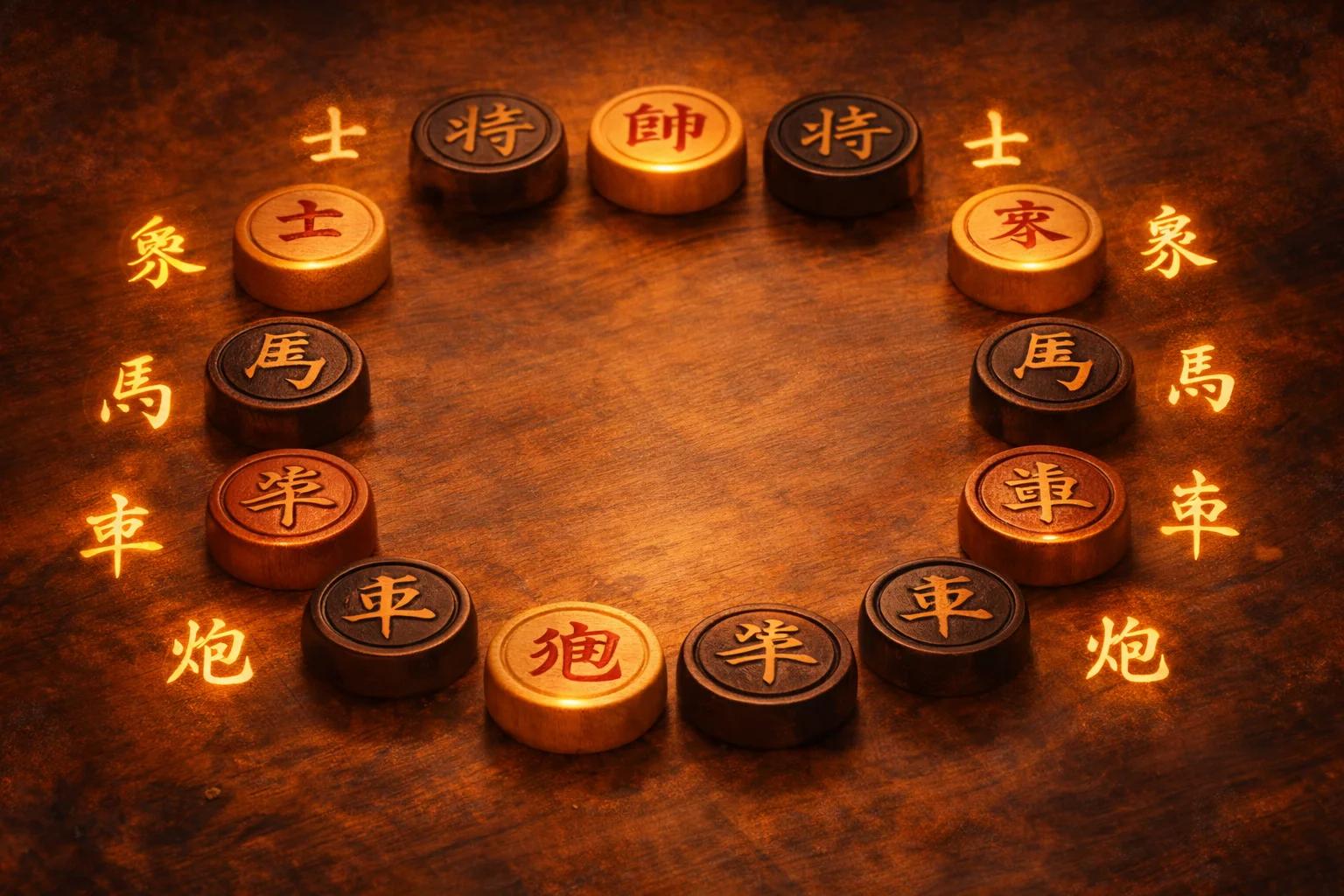
Unlike Western chess where piece values are universally agreed upon, Xiangqi piece values are more fluid and context-dependent. The widely accepted scale rates the Chariot at 9 points, the Cannon at 4.5 points, the Horse at 4 points, the Advisor and Elephant at 2 points each, and the Soldier at 1 point before crossing the river (2 points after). However, these values shift dramatically based on the game phase. Cannons are stronger in crowded positions with many screens, while Horses excel in open endgames. A crossed Soldier near the palace can be worth more than an Elephant. Understanding these dynamic valuations is key to making smart trades and developing winning positions.
The Chariot: King of the Board
The Chariot (Ju) is unanimously considered the most powerful piece in Xiangqi. It moves any number of points along a straight line, horizontally or vertically, identical to the Rook in Western chess. Its unrestricted range and ability to operate anywhere on the board make it dominant in every phase of the game. A single Chariot can control an entire file or rank, pin pieces against the General, or deliver checkmate alone with proper support. The first strategic principle every player should learn is to develop Chariots early. A Chariot trapped behind your own pieces in the opening is a wasted resource. Top players aim to activate at least one Chariot within the first three to four moves. Common opening lines like the Central Cannon specifically plan Chariot development as a primary objective.
The Cannon: Xiangqi's Unique Weapon
The Cannon (Pao) is the piece that truly distinguishes Xiangqi from all other chess variants. It moves exactly like the Chariot in a straight line, but to capture, it must jump over exactly one piece (the screen or platform) between itself and its target. This dual movement and capture mechanic creates endlessly fascinating tactical possibilities. In the opening and middlegame, when the board is crowded with pieces, Cannons are tremendously powerful. They can threaten multiple targets simultaneously by using different screens. Classic opening systems like the Central Cannon (placing the Cannon on the central file) and the Screen Horse (using the Horse as a cannon platform) are built around exploiting this power. However, as pieces get traded and the board opens up, Cannons lose their effectiveness because screens become scarce. This is why experienced players often prefer to keep their Cannons active in the middlegame while transitioning to Chariot-and-Horse combinations for the endgame.
The Horse: Tactical Powerhouse
The Horse (Ma) moves in an L-shape: one point orthogonally followed by one point diagonally outward. Unlike the Knight in Western chess, the Xiangqi Horse can be blocked. If any piece occupies the adjacent point in the direction of the Horse's first step, the move is illegal. This blocking rule (called hobbling the Horse's leg) makes the Horse a piece that thrives in open positions but struggles when surrounded by pieces. In the opening, Horses are typically developed to the third rank where they can support the center. A well-placed Horse on the opponent's side of the river becomes a devastating attacker, able to fork the General and other pieces. The Horse pairs excellently with the Chariot: the Chariot controls lines while the Horse leaps into gaps. In the endgame, a Horse can be superior to a Cannon because it does not need screens to capture.
The Elephant: Defensive Anchor
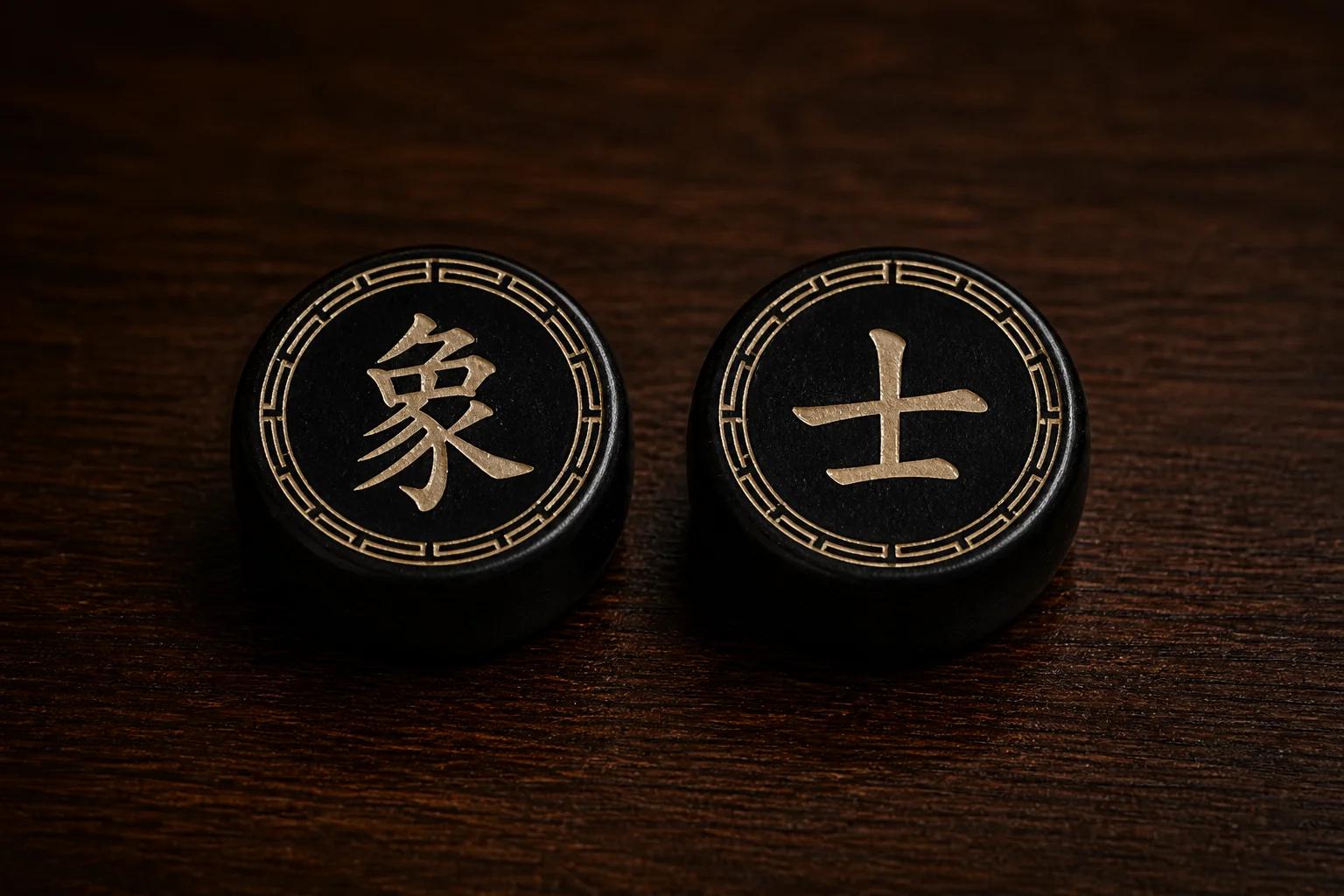
The Elephant (Xiang) moves exactly two points diagonally and cannot cross the river, making it a purely defensive piece restricted to your own half of the board. It can also be blocked if a piece sits on the intermediate diagonal point. Despite these limitations, Elephants serve a crucial role in Xiangqi defense. Positioned correctly, a pair of Elephants can cover the diagonal approaches to your General, blocking Cannons and Horses from infiltrating. Losing one Elephant weakens your defensive structure noticeably, and losing both often exposes the General to lethal attacks. A practical tip: avoid trading your Elephants unless you gain significant material in return. In the endgame, an Elephant can make the difference between holding a draw and losing.
The Advisor: Palace Guardian
The Advisor (Shi) moves one point diagonally and is confined to the palace, meaning it can only ever occupy five specific points. While this makes it the most restricted major piece, its role is indispensable. Advisors form the inner defensive ring around the General, and their diagonal movement complements the General's orthogonal movement perfectly. A formation with the General on the center point and both Advisors on diagonal points creates a robust defensive structure that resists most attacks. When you lose an Advisor, the General becomes significantly more vulnerable to Cannon attacks along diagonals and Chariot attacks along files. In practical play, keeping at least one Advisor alive is often a priority, especially in the endgame where the General needs maximum protection.
The Soldier: Small but Mighty
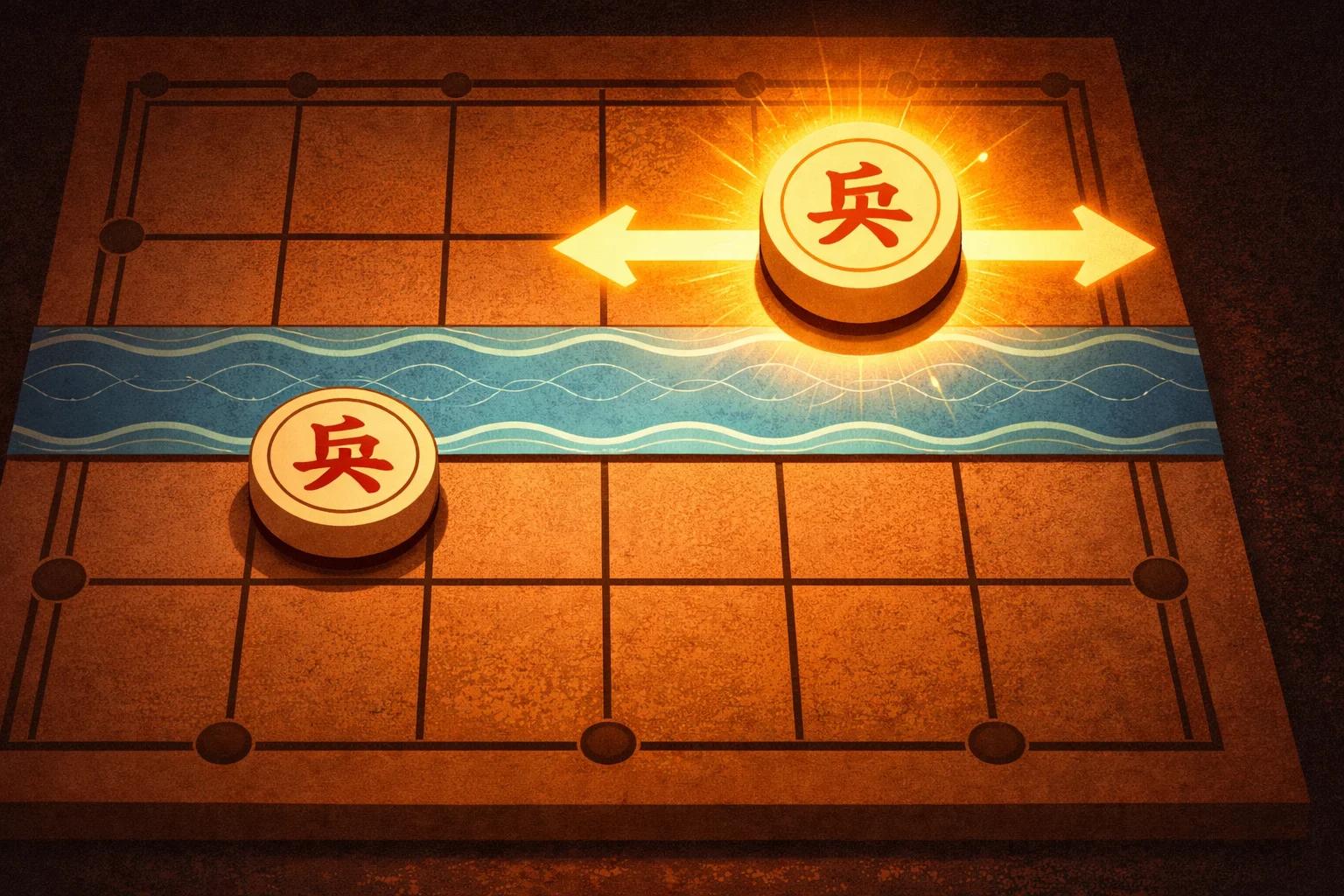
Soldiers (Bing/Zu) are the weakest pieces on the board, but their importance grows as the game progresses. Before crossing the river, a Soldier can only advance one point forward. After crossing, it gains the ability to move one point sideways, effectively tripling its mobility. A crossed Soldier near the enemy palace becomes a serious threat because it restricts the General's movement, supports other attacking pieces, and cannot be easily ignored. In endgame studies, a single Soldier paired with a Chariot or Horse can be enough to deliver checkmate. The strategic decision of which Soldiers to advance and when is a hallmark of experienced play. Pushing the central Soldier is common in many openings because it opens the central file for the Chariot and creates threats in the middle of the board.
Piece Combinations and Synergy
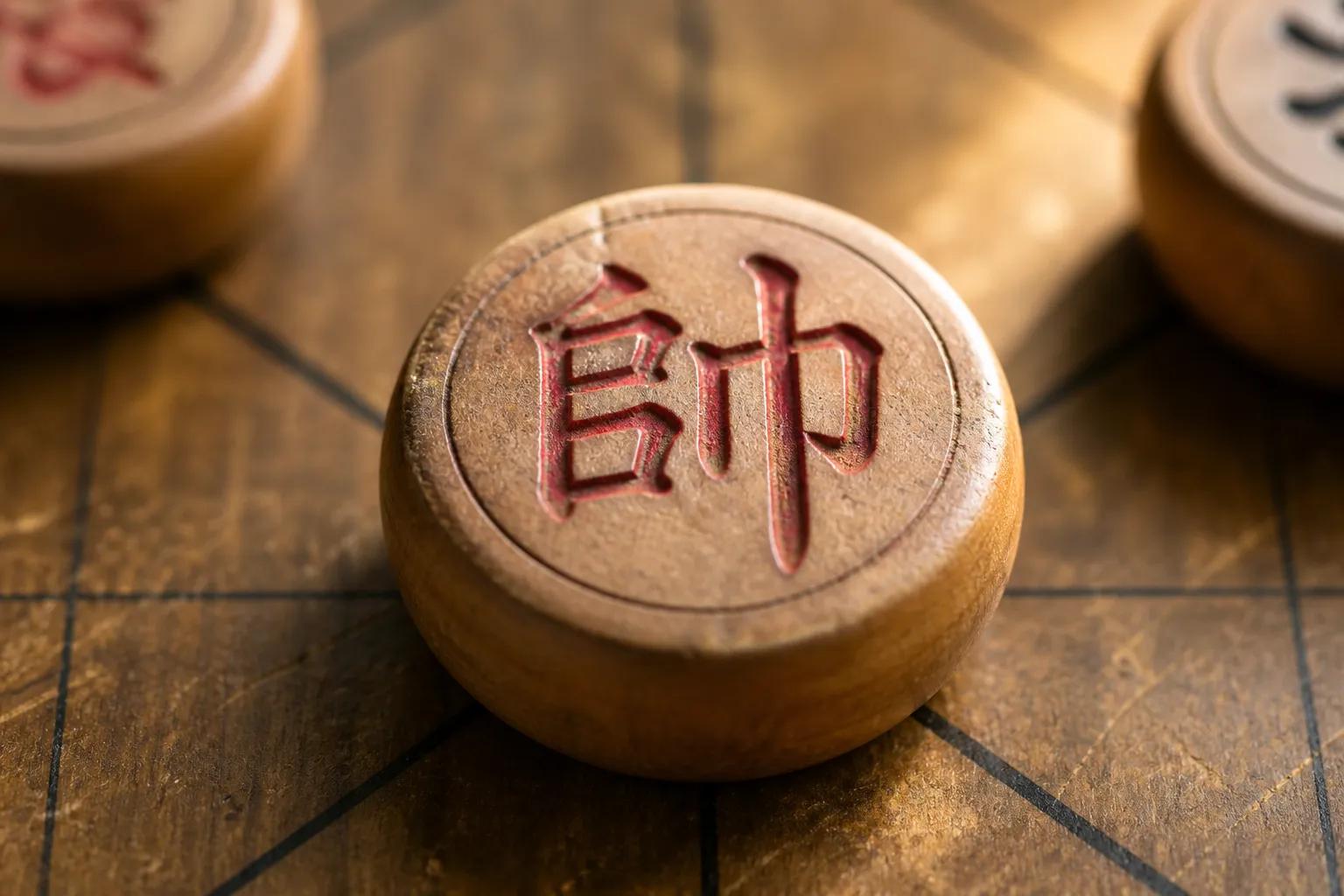
The true art of Xiangqi lies not in individual piece strength but in how pieces work together. The Chariot-Horse combination is considered the strongest attacking partnership, able to deliver checkmate patterns like the Iron Bolt and the Hook. The Chariot-Cannon pair excels at pinning pieces and creating double threats along files and ranks. Two Horses working together can control a remarkable number of points and create mating nets that are nearly impossible to escape. Even the humble Soldiers contribute to combinations: a crossed Soldier can serve as a Cannon screen, block an enemy General's escape route, or protect a key intersection. Learning classic checkmate patterns and practicing puzzles are the best ways to develop your sense of piece coordination. Xiangqi One offers hundreds of tactical puzzles designed to train exactly this skill. New to the game? Start with our beginner's guide to Xiangqi or explore opening strategies. The one piece not covered above is the General itself, which never leaves the palace and is what everything else on the board is aimed at — our complete guide to the General covers its movement, the flying general rule and the mating patterns that follow from it.