Why Notation Matters
Notation is the language used to record and communicate moves in Xiangqi. Just as musicians use sheet music to share compositions, Xiangqi players use notation to record games, study openings, share puzzles, and analyze positions. Without a notation system, it would be impossible to study historical games, publish strategy books, or discuss tactics with other players. Understanding at least one notation system is essential for any player who wants to improve beyond casual play. Three main systems are used in the Xiangqi world today: WXF notation (the international standard), traditional Chinese notation, and coordinate notation.
How the Board Is Numbered
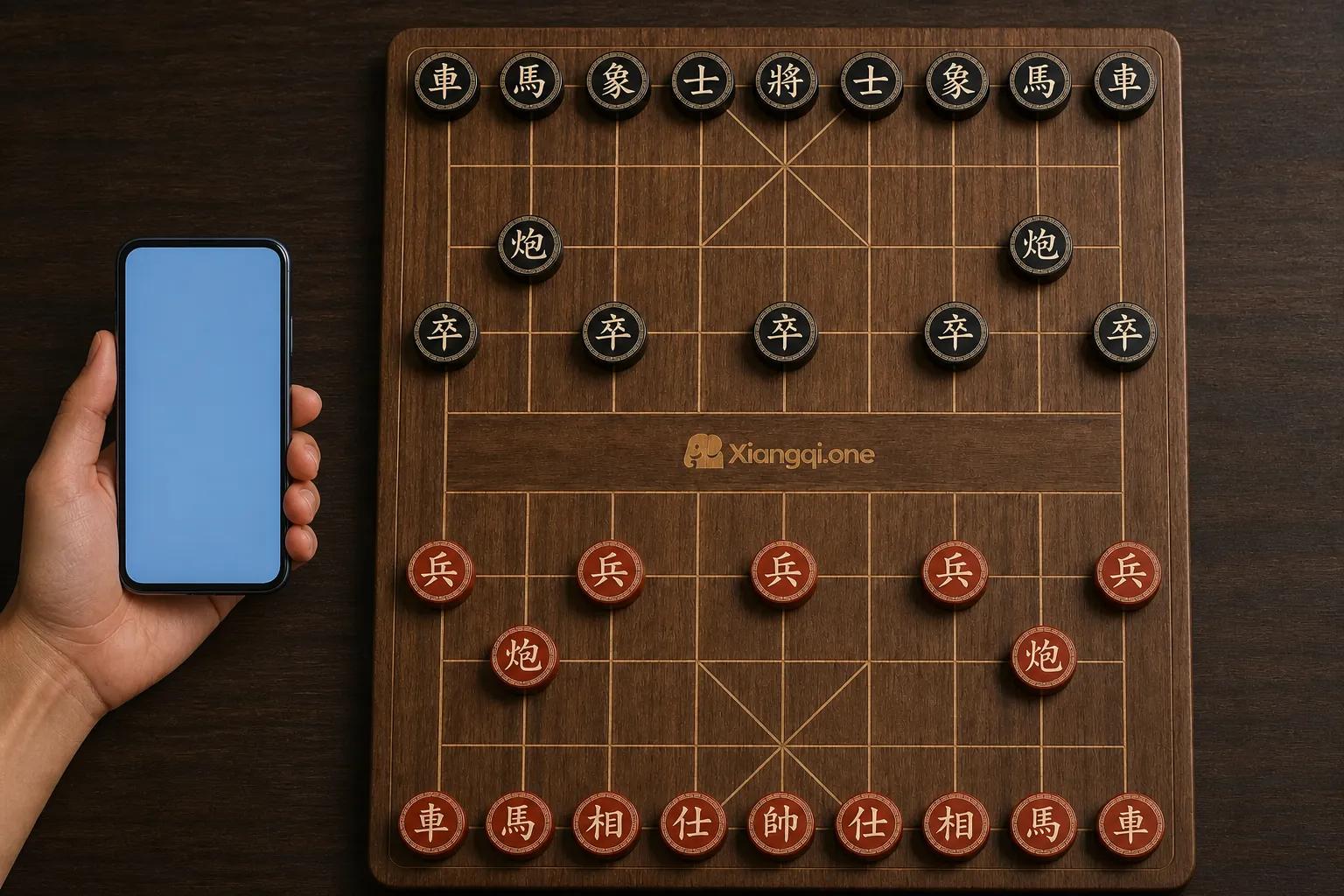
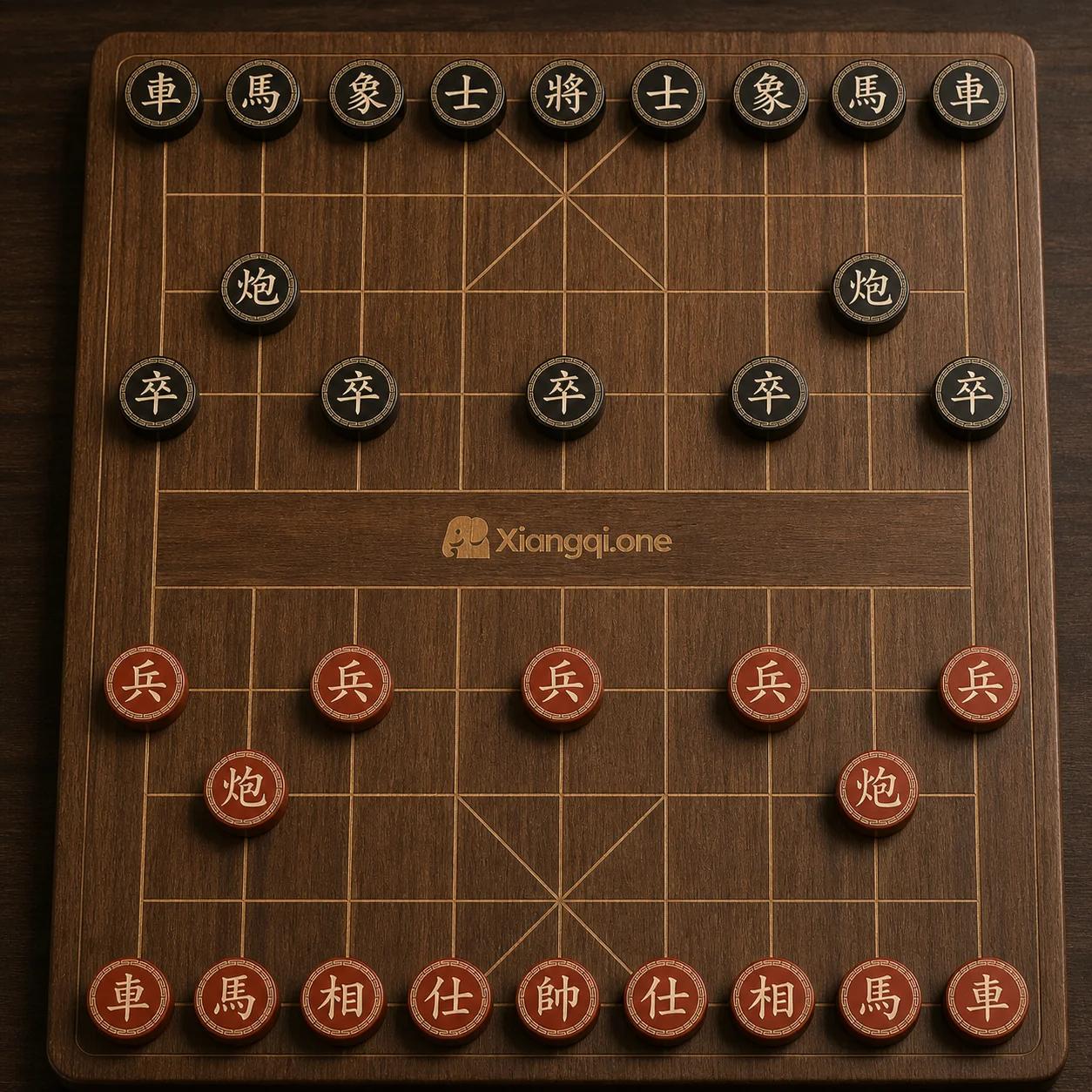
Before learning any notation system, you need to understand how the board is labeled. In Xiangqi, the nine vertical lines (files) are numbered 1 through 9 from each player's perspective. This is a crucial detail: Red counts files from right to left (1 on the right, 9 on the left), while Black counts from their own right to left. This means that Red's file 1 is the same physical line as Black's file 9. The horizontal lines (ranks) are numbered from each player's own side, starting at 1 (closest to the player) up to 10 (the opponent's back row). The River sits between ranks 5 and 6.
WXF Notation
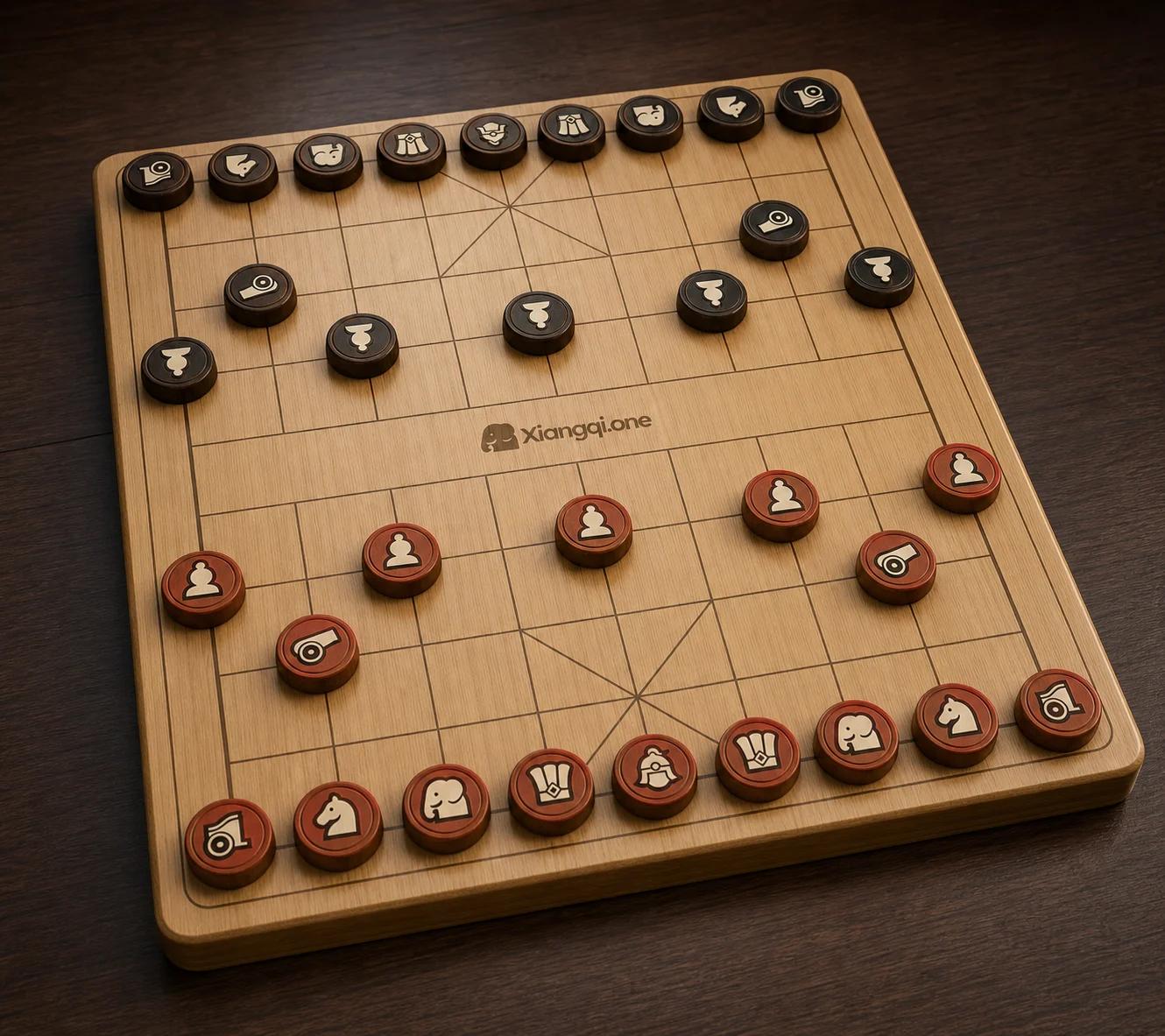
WXF notation, established by the World Xiangqi Federation, is the international standard used in tournaments and publications worldwide. Each move is written as a four-character code: the piece abbreviation, its file number, the action, and the destination. Pieces are abbreviated with a single letter: K (King/General), A (Advisor), E (Elephant), H (Horse), R (Chariot/Rook), C (Cannon), P (Pawn/Soldier). The action is one of three symbols: + (advance/forward), - (retreat/backward), or = (traverse/sideways). For pieces that move along files (R, C, K, P), the destination is the file number they land on for sideways moves, or the number of points moved for forward/backward moves. For example, "C2=5" means the Cannon on file 2 moves sideways to file 5. "R1+2" means the Chariot on file 1 advances 2 points. When two identical pieces share the same file, a prefix distinguishes them: + for the front piece and - for the rear piece.
Traditional Chinese Notation
Traditional Chinese notation is the oldest system, used in classical manuals and widely understood across China and Southeast Asia. It follows the same logical structure as WXF but uses Chinese characters. Pieces are written with their Chinese names: 帥/將 (General), 仕/士 (Advisor), 相/象 (Elephant), 馬/马 (Horse), 車/俥 (Chariot), 炮/砲 (Cannon), 兵/卒 (Soldier). Red and Black pieces use different characters for the same role, reflecting their distinct identities. Actions are written as 進 (advance), 退 (retreat), or 平 (traverse). File numbers use Chinese numerals for Red (一 through 九) and Arabic numerals for Black (1 through 9). For example, "炮二平五" means the Cannon on file 2 moves sideways to file 5 (Red's perspective). This system is deeply integrated into Chinese Xiangqi culture and is the default in most Chinese-language books, websites, and commentary.
Coordinate Notation
Coordinate notation is the simplest and most unambiguous system. Each move is described by its starting position and ending position using a pair of coordinates. Each position on the board is identified by its file (a–i, from left to right from Red's perspective) and rank (0–9, from Red's back row to Black's back row). A move is written as four characters: the origin file and rank, followed by the destination file and rank. For example, "b0c2" means a piece moves from b0 to c2 (a Horse development from its starting position). There is no need to specify the piece type because the starting square already contains exactly one piece. This system is favored by computer engines and online platforms because it is completely unambiguous and easy to parse programmatically. It also avoids all the complexities of perspective-dependent numbering.
Comparing the Three Systems
Each notation system has its strengths. WXF notation strikes a balance between readability and international accessibility. It uses Latin letters that anyone can read, follows a logical structure, and is the standard for international tournaments and English-language publications. Chinese notation is essential if you want to read classical Xiangqi literature, study Chinese-language strategy books, or follow Chinese-language game commentary. It carries cultural weight and is immediately familiar to native Chinese speakers. Coordinate notation is the most precise and the easiest for beginners to learn. There is zero ambiguity, no perspective-dependent numbering, and no special rules for distinguishing identical pieces on the same file. It is also the format used internally by engines and analysis tools.
Which Notation Should You Use?
The best notation depends on your goals. If you are a beginner, start with coordinate notation. It is the easiest to learn and the hardest to misread. If you play in tournaments or study international Xiangqi resources, WXF is the standard you should learn. If you want to dive into Chinese Xiangqi culture, read classical manuals, or follow Chinese commentary streams, learning Chinese notation is invaluable. Many serious players eventually become comfortable with all three systems. Xiangqi One lets you switch between WXF, Chinese, and coordinate notation in real time, so you can play and study in whichever format feels most natural. New to the game? Start with our beginner's guide or learn about each piece in detail. Ready to make it stick? Practice with our free interactive notation trainer — a two-minute lesson, levels and timed challenges.