Why Openings Matter in Xiangqi
The opening is the foundation of every Xiangqi game. A well-played opening gives you active pieces, a safe General, and control of key files. A poorly played opening leaves you cramped, passive, and struggling to survive the middlegame. Unlike Western chess, where opening theory can extend 20 or 30 moves deep, Xiangqi openings are generally shorter and more principle-based. Most games leave "book" within the first 10 to 15 moves. Understanding the ideas behind the main openings is more important than memorizing long sequences. The five systems covered here represent the vast majority of games played at all levels.
The Central Cannon (Zhong Pao)
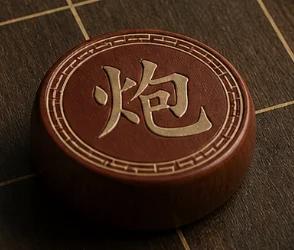
The Central Cannon is the most popular and aggressive opening in Xiangqi. Red plays Cannon to the central file (C2=5 in WXF notation), immediately aiming at the Black General. This opening signals attacking intent from the very first move. The Central Cannon is versatile: Red can follow up by developing the Chariot quickly, advancing Soldiers to support the attack, or deploying the Horse to create multiple threats. The central Cannon puts immediate pressure on Black's Palace and forces a response. Black has several defensive systems to choose from, but must react accurately or risk falling under a powerful attack. For beginners, the Central Cannon is the best opening to learn first because it teaches attacking principles and central control.
The Screen Horse Defense (Ping Feng Ma)
The Screen Horse Defense is Black's most popular response to the Central Cannon. Black develops both Horses to protect the central points (H2+3 and H8+7), creating a solid screen in front of the General. The two Horses guard the critical e7 and e3 intersection points, preventing the enemy Cannon from exploiting the central file. The Screen Horse Defense is flexible: after setting up the Horse screen, Black can choose between many plans, including advancing Soldiers, developing Chariots on the flanks, or positioning Cannons for counterattack. This defense has been played for centuries and remains the most popular at all levels because it offers a balance of solidity and counterattacking potential.
The Elephant Opening (Fei Xiang Ju)
The Elephant Opening is a quieter, more positional system where Red develops an Elephant early instead of immediately placing the Cannon on the center file. By playing E3+5 or E7+5, Red prioritizes solid development and flexibility over direct aggression. The Elephant Opening often leads to slower, more strategic games where both sides maneuver their pieces before launching attacks. This system is popular among players who prefer positional play over sharp tactical battles. It is also an excellent choice against opponents who are well-prepared against the Central Cannon, as it avoids the main theoretical lines entirely. The Elephant Opening teaches patience and piece coordination.
The Cross-Palace Cannon (Guo Gong Pao)
The Cross-Palace Cannon is a sophisticated opening where a Cannon is positioned on the opposite side of the Palace, typically with C8=6 (placing the Cannon on file 6 instead of the center file 5). This creates an asymmetric setup that can be difficult for the opponent to handle. The Cross-Palace Cannon avoids the well-known Central Cannon theory and creates unusual positions where practical experience matters more than memorization. The Cannon on file 6 indirectly supports the center while also preparing for flank attacks. This opening has gained popularity among advanced players looking for fresh positions and is effective as a surprise weapon. It rewards creative thinking and flexible piece deployment.
The Pawn Opening (Xian Ren Zhi Lu)
The Pawn Opening, where Red advances a flank Soldier on the first move (typically P3+1 or P7+1), is one of the oldest opening systems in Xiangqi. By advancing a Soldier, Red opens a file for the Chariot while keeping maximum flexibility for the Cannons and Horses. The Pawn Opening is inherently flexible because it does not commit to any specific piece placement early. Red can observe Black's response and then choose the most appropriate plan. Many grandmasters use the Pawn Opening precisely because of this flexibility: it avoids prepared lines and leads to positions where understanding outweighs memorization. For beginners, the Pawn Opening teaches the importance of Chariot development and file control.
Common Opening Principles
Regardless of which opening you choose, several principles apply universally. Develop your Chariots within the first five to seven moves; a delayed Chariot is almost always a strategic mistake. Contest the central file, either by occupying it or by controlling it from adjacent files. Keep at least one Advisor and one Elephant protecting your General unless you have a concrete attacking reason to sacrifice them. Develop your Horses toward the center where they have maximum influence, not to the edges where they are passive. Use your Cannons while screens are plentiful. Finally, have a plan: every move should serve a purpose, whether it is developing a piece, creating a threat, or improving your position.
Building Your Opening Repertoire
For beginners, the best approach is to learn one opening as Red and one defense as Black, and play them repeatedly until you understand the typical plans and piece placements. The Central Cannon as Red and the Screen Horse Defense as Black is the classic combination that covers all the fundamentals. As you improve, gradually add one or two alternative systems to keep your opponents guessing. Review your games after playing them: use analysis tools to identify where you deviated from good principles and what you could have done differently. Xiangqi One provides post-game analysis with engine evaluations, showing you exactly where your position improved or deteriorated. Learn the fundamentals with our strategy guide or master each piece first.