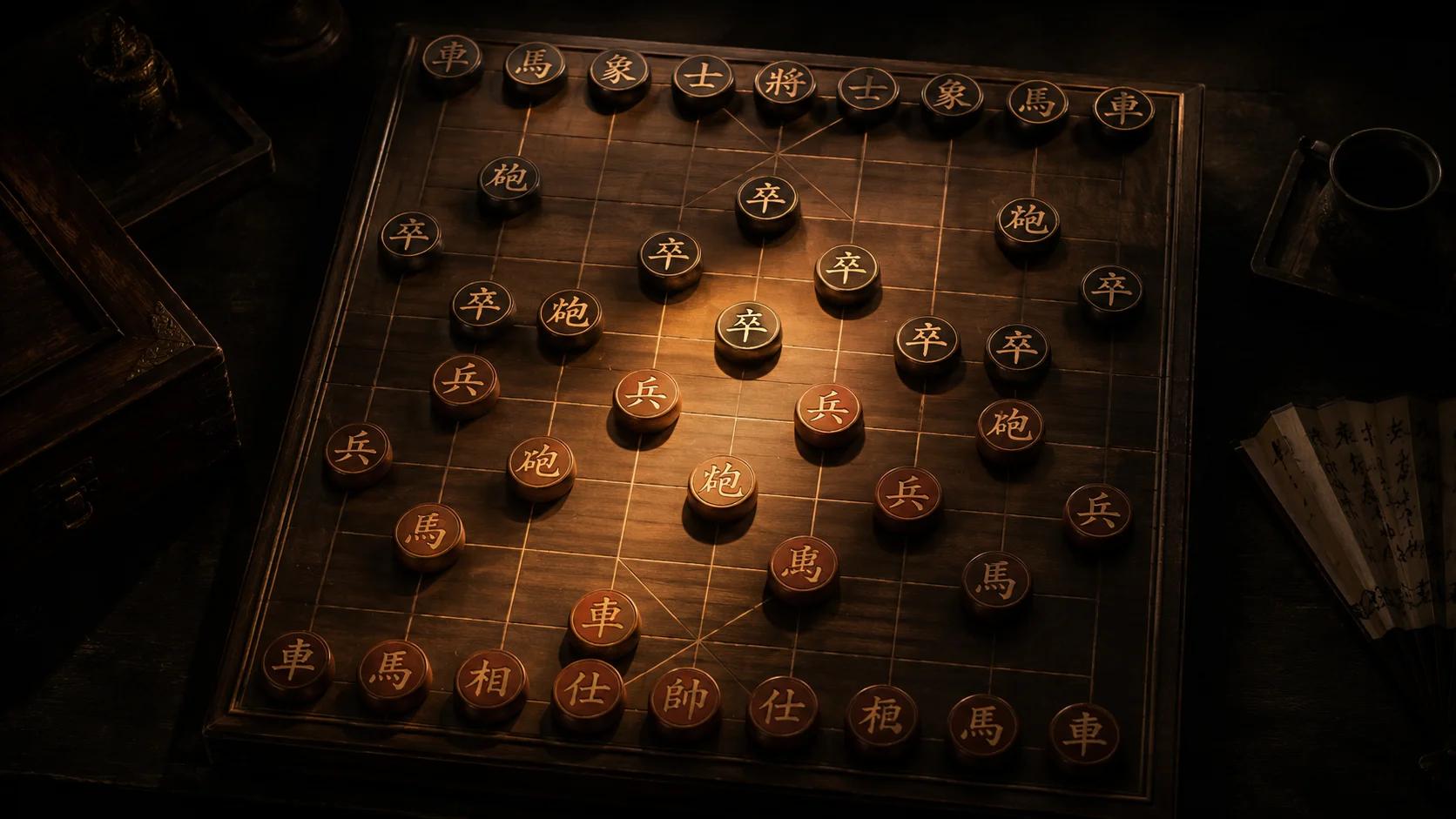
Develop Your Chariots First
The Chariot is the most powerful piece in Xiangqi, yet many beginners leave it sitting idle on the back rank for too long. Your first priority in any game should be to activate at least one Chariot within the first few moves. Move your Horses, Cannons, or Soldiers out of the way to open a file for your Chariot. A common opening principle is to bring a Chariot to the central file or to the edge files where it can quickly influence the game. A Chariot in play is worth far more than a Chariot stuck behind its own pieces.
Control the Central File
The central file (column 5 from Red's perspective) is the most important line on the board. It provides the most direct route to the enemy General, and controlling it gives your pieces maximum flexibility. Many standard openings involve placing a Cannon or Chariot on the central file early. If your opponent controls the center and you do not, you will find yourself constantly reacting to threats instead of creating your own. Contest the central file from the very first moves.
Use Your Cannons Early
Cannons are at their strongest in the opening and middlegame when the board is crowded with pieces that can serve as screens. As pieces get traded off, Cannons lose effectiveness because they need a screen to capture. This means you should use your Cannons aggressively in the early game: aim them at the enemy Palace, use them to pin enemy pieces, or double them on an important file. Do not save your Cannons for the endgame; their value diminishes as the board empties.
Keep Your Defenses Intact
A common beginner mistake is to focus entirely on attack while neglecting defense. Your General is safest when protected by at least one Advisor and one Elephant. Avoid trading away both Advisors or both Elephants unless you get significant compensation. The combination of one Advisor and one Elephant covering the Palace creates a solid defensive structure that is difficult to crack. If you lose all your defensive pieces, even a small attacking force from your opponent can deliver checkmate.
Advance Your Soldiers Across the River
Soldiers are weak before they cross the River, limited to one point forward per move. But once across, they gain sideways movement and become surprisingly useful attacking pieces. A Soldier on the fifth or sixth rank can restrict the enemy General's movement, support your major pieces, and create threats that are hard to ignore. Do not underestimate a well-placed Soldier. Advance them purposefully rather than leaving them on their starting positions throughout the game.
Coordinate Your Pieces
Individual pieces in Xiangqi are less powerful than coordinated groups. A Chariot alone can threaten, but a Chariot supported by a Horse or Cannon can deliver checkmate. Look for ways to make your pieces work together: use a Cannon with a Chariot as its screen, position Horses to support Chariot attacks, and use Soldiers to restrict the enemy General's escape routes. The most devastating attacks in Xiangqi come from two or three pieces working in harmony, not from a single piece acting alone.
Watch for the Flying General
The rule that two Generals cannot face each other on the same file with no pieces between them is easy to forget but critically important. Always be aware of the General opposition. In the endgame, you can use this rule to your advantage: place your General on the same file as the enemy General and use the opposition to restrict the opponent's movement. Conversely, never accidentally remove the last piece between the two Generals, as this would be an illegal move. Many endgame victories and tactical tricks rely on the flying General rule.
Trade Pieces When Ahead
If you have a material advantage, look for opportunities to trade pieces. Each trade amplifies your advantage because you have more attacking power left than your opponent. For example, if you are up a Horse, trading both Chariots leaves your opponent without major attacking pieces while you still have a Horse. Conversely, if you are behind in material, avoid trades and keep the board complex. More pieces on the board means more chances for your opponent to make a mistake and more tactical opportunities for a comeback.
Learn Basic Checkmate Patterns
Knowing how to deliver checkmate is just as important as building an advantage. Study the most common checkmate patterns: the Chariot and Horse combination, the double Chariot attack, the Cannon and Chariot battery aimed at the Palace, and the "iron bolt" pattern where a Chariot on the back rank delivers checkmate with support. Practicing puzzles is the fastest way to internalize these patterns. Platforms like Xiangqi One offer hundreds of tactical puzzles that train your pattern recognition and help you convert advantages into wins.
Study Openings, but Focus on Principles
While memorizing opening sequences can help, understanding the principles behind them is far more valuable. Every good opening in Xiangqi follows the same principles: develop your Chariots quickly, contest the center, activate your Cannons while they have screens, and keep your defenses solid. Common openings like the Central Cannon, the Screen Horse Defense, the Elephant Opening, and the Cross-Palace Cannon all illustrate these principles in different ways. Learn two or three openings well rather than memorizing dozens superficially. Use Xiangqi One's analysis tools to review your games and understand where your opening play went right or wrong. Also check out our openings guide and pieces guide for deeper strategy. If you are teaching a child rather than learning yourself, our guide to Xiangqi for kids takes a different route through the same material.