The King of the Board
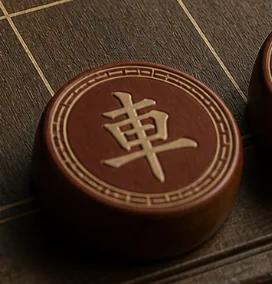
The Chariot (車/车, Ju) is universally recognized as Xiangqi's most powerful piece. It moves any number of intersections in a straight line, horizontally or vertically, identical to the Rook in Western chess. It cannot jump over other pieces. With an estimated value of 9 points, the Chariot is worth nearly as much as two Horses or two Cannons combined. A classic Xiangqi saying states: "Losing a Chariot is losing half the game." Its unlimited range and ability to operate anywhere on the board make it the key piece in any strategy.
Early Development: The Golden Rule
The most important principle in Xiangqi is to develop your Chariots as early as possible. A Chariot trapped behind its own pieces wastes enormous offensive potential. Experienced players typically move their Chariot to an open file within the first few moves. The ideal opening connects at least one Chariot to a free file before the fifth move. Failing to develop Chariots quickly is one of the most common beginner mistakes and a disadvantage that strong players exploit immediately.
Controlling Open Files
An open file is a vertical line without your own Soldiers blocking it. Placing a Chariot on an open file allows it to control the entire length of the file, from your side of the board to the enemy Palace. Controlling open files is a fundamental strategic concept. If your opponent does not contest the file, your Chariot can penetrate deep into enemy territory. The central file is especially valuable because it provides the most direct route to the enemy General.
Attack Tactics with the Chariot
The Chariot is the primary attacking piece in most Xiangqi combinations. A Chariot entering the opponent's first or second rank creates immediate threats against the General. The Chariot and Horse combination is particularly devastating: the Chariot controls lines while the Horse attacks from unusual angles. The double Chariot (both Chariots coordinated on adjacent files or the same file) can be irresistible. Another powerful tactic is the temporary material sacrifice to open a file for your Chariot.
The Chariot in Defense
Although the Chariot is primarily an offensive piece, its defensive value should not be underestimated. A Chariot positioned on the back rank can protect the entire perimeter of the Palace. In positions where you are under attack, moving a Chariot back to defend can save the game. The Chariot is also the best piece for capturing enemy invaders that have penetrated your territory. However, using both Chariots defensively usually indicates you are in a difficult position.
Chariot vs Two Minor Pieces
A frequent strategic decision is whether to trade a Chariot for two minor pieces (Horse and Cannon, or two Horses, etc.). Generally, the Chariot is more valuable than two minor pieces because its mobility and range are superior. However, there are exceptions: if your minor pieces are perfectly coordinated and the opponent's Chariot is passive, the trade may favor the side with two pieces. In the endgame, the Chariot usually dominates because it can cover the entire board quickly.
Advanced Techniques
The lateral Chariot is a technique where you move your Chariot horizontally along a rank to attack multiple targets. The sacrifice Chariot involves giving up your Chariot to achieve a decisive positional advantage or a forced checkmate. The ambush Chariot consists of positioning it where it appears passive but has a hidden threat. Study master games and solve tactical puzzles to develop your skill with this piece. You can also explore how the Chariot interacts with other pieces in our strategy guide for beginners.