The Soldier's Role in Xiangqi
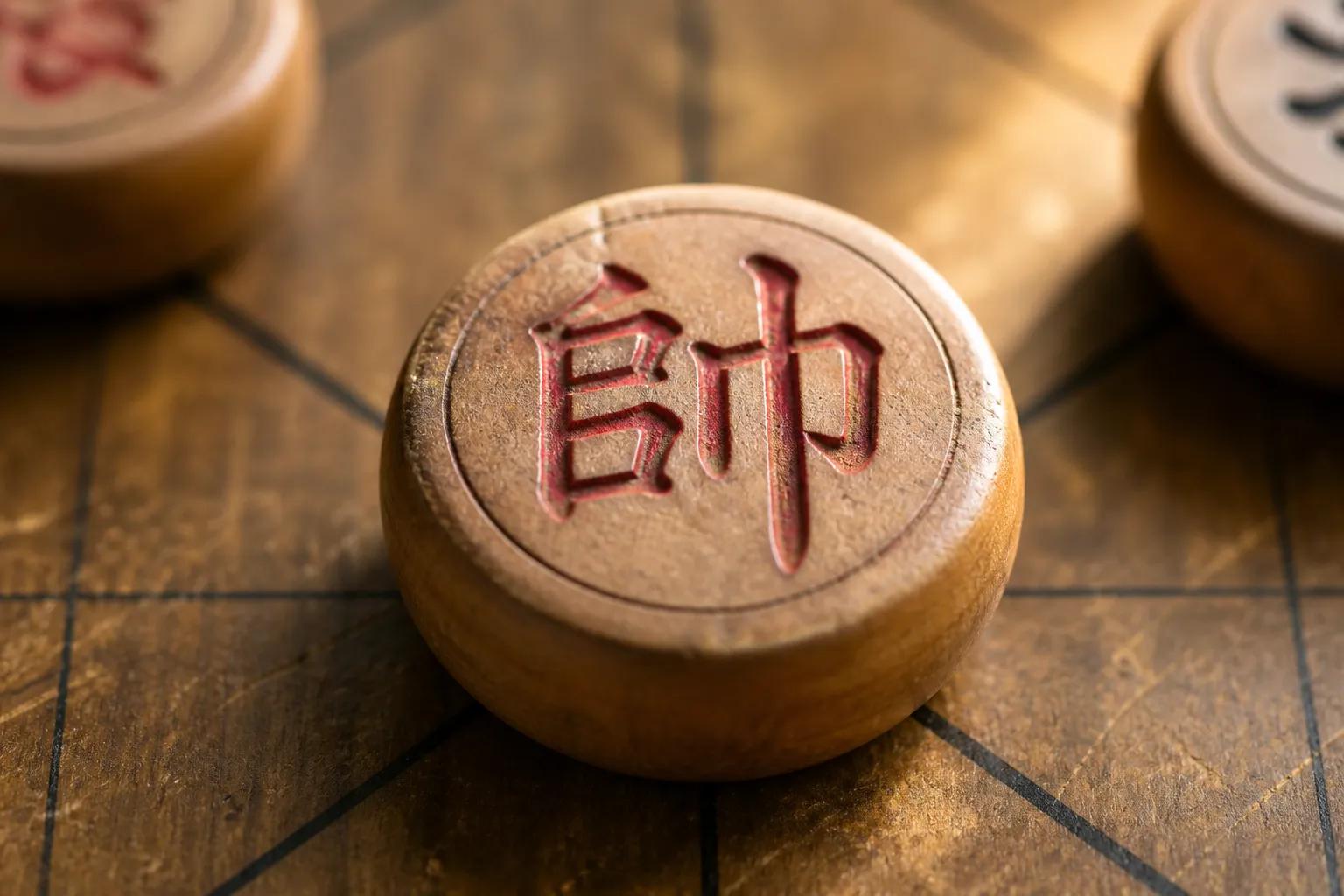
Each player starts with five Soldiers (兵 Bing for Red, 卒 Zu for Black), lined up on the fourth row of their side with gaps between them. The Soldier is the most numerous piece in Xiangqi and is often underestimated by beginners. While it is the weakest piece in terms of raw value, the Soldier plays a critical role in controlling space, supporting attacks, and creating threats in the endgame. Understanding when and how to use your Soldiers effectively is a key skill that separates experienced players from novices. For a full overview of all pieces and their roles, check the pieces guide.
Movement Before the River
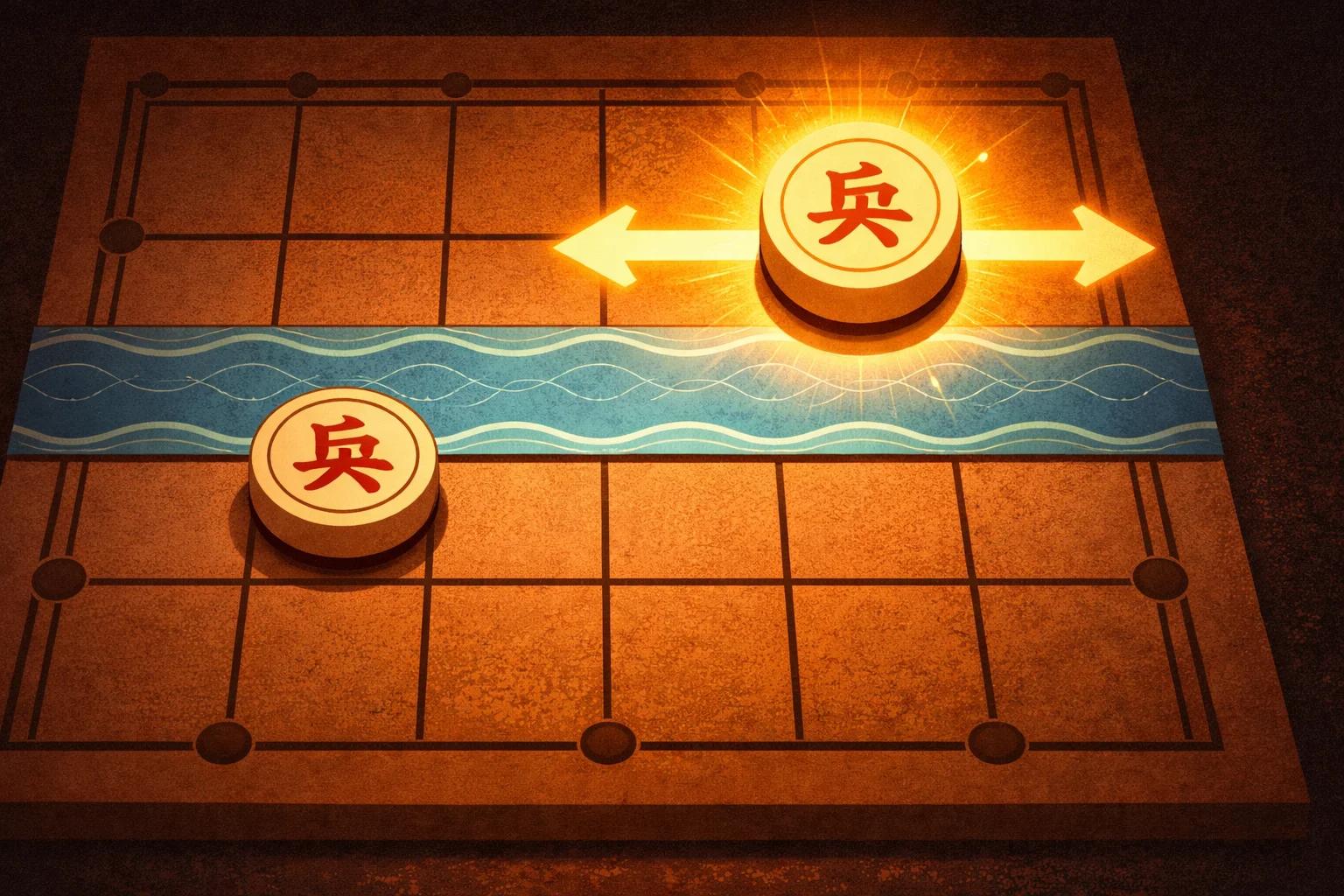
Before crossing the river, the Soldier can only move one point forward. It cannot move sideways or backward at any point in the game. This means that on your own side of the board, Soldiers are essentially static defensive and structural pieces. They serve as screens for your Cannons, block certain attack lines, and occupy key intersections. Because their movement is so limited before the river, advancing a Soldier is a commitment: once it moves forward, it cannot retreat. This makes the timing of Soldier advances an important strategic consideration that you should think about carefully before committing.
Crossing the River: Gaining Lateral Movement
When a Soldier crosses the river (the horizontal dividing line on the board), it gains the ability to move one point sideways in addition to one point forward. This transformation is significant because it turns a slow, one-dimensional piece into a versatile attacker that can threaten multiple directions. A crossed Soldier near the enemy Palace can be extremely annoying to deal with, as it attacks three intersections at once: forward, left, and right. Unlike a pawn in Western chess, the Soldier never promotes to a stronger piece, but its gained lateral movement is powerful enough to create real threats on its own.
The Crossed Soldier as an Attacker
A crossed Soldier that reaches the opponent's back ranks becomes a surprisingly dangerous attacker. Positioned on the bottom row near the enemy Palace, a Soldier can threaten the General directly and restrict its movement. Two crossed Soldiers working together can create mating nets that are extremely difficult to escape. The combination of a crossed Soldier with a Horse or Cannon is one of the most effective attacking partnerships in Xiangqi. A Soldier on the enemy's bottom rank controls three points and can tie down defensive pieces, giving your major pieces freedom to deliver the final blow. Never underestimate a Soldier that has penetrated deep into enemy territory.
The Soldier as a Cannon Screen
One of the Soldier's most important tactical roles is serving as a screen for the Cannon. Since the Cannon needs exactly one piece between itself and its target to capture, Soldiers make ideal screens because they are expendable and easy to position. In many openings, a Soldier on the central file acts as a natural screen for the Cannon behind it. Advancing a Soldier to create or maintain a screen for a Cannon attack is a common tactical motif. Conversely, your opponent will often try to eliminate your Soldiers specifically to remove your Cannon's screens, so protecting key Soldiers can be just as important as protecting major pieces.
When NOT to Advance Soldiers
While crossing the river is powerful, not every Soldier should be advanced. Pushing a Soldier too early can weaken your own position by removing a screen for your Cannon or opening a file for the opponent's Chariot. The wing Soldiers (on the edges) are generally less valuable when crossed because they have fewer movement options near the side of the board. Advancing a Soldier without a clear plan wastes tempo that could be used for developing major pieces. A classic beginner mistake is rushing all five Soldiers forward in the opening instead of focusing on piece development. Be selective: advance Soldiers that support a specific tactical or strategic goal.
Soldiers in the Endgame
In the endgame, crossed Soldiers become extremely valuable. With fewer pieces on the board, a Soldier near the enemy Palace can tie down the General and defensive pieces, creating opportunities for your remaining attackers. A single crossed Soldier on the bottom rank is worth approximately 2 points, making it comparable in value to an Advisor or Elephant. The combination of a crossed Soldier and a Chariot is often enough to force checkmate. Even a lone crossed Soldier can sometimes force a draw against a lone Advisor or Elephant by creating perpetual threats. Practice Soldier endgames by playing on Xiangqi One to develop an instinct for when your Soldiers are worth more than the opponent's defensive pieces.