Assessing Your Current Level
Before you can improve, you need to know where you stand. Ask yourself a few honest questions: Do you know how every piece moves without hesitation? Can you spot a checkmate in one move? Do you have a plan in the opening, or do you just push pieces forward? If you are still learning the rules, you are a true beginner. If you know the rules but lose most games, you are an early beginner. If you can win against weak opponents but struggle against anyone with experience, you are a late beginner ready to become intermediate. Understanding your level helps you focus on the right areas. There is no shortcut — you need to build each skill layer by layer. Review the common beginner mistakes to see which ones you are still making.
Phase 1: Master the Basics
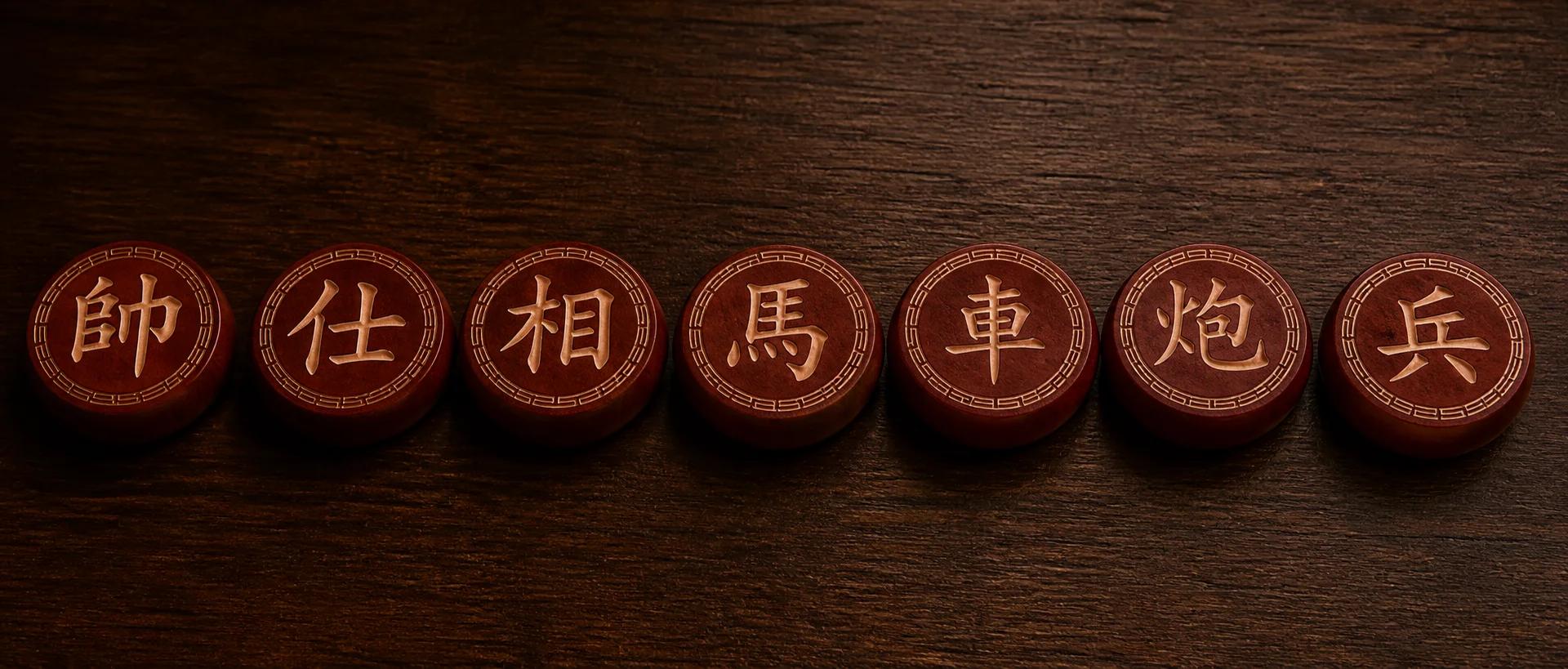
If you are new to Xiangqi, your first priority is to learn the rules and piece movements until they are second nature. You should be able to recognize each piece, know where it starts, and understand its movement without thinking. Pay special attention to the pieces that are unique to Xiangqi: the Cannon's jump capture, the Elephant's diagonal move with blocking, and the Advisor's confinement to the Palace. Practice setting up the board from memory. Play slow games against easy bots and focus on making legal moves confidently. This phase usually takes one to two weeks of daily practice. Start with the how to play Xiangqi guide if you need a refresher on any rules.
Phase 2: Tactical Training
Once the basics are solid, tactics become your fastest path to improvement. Tactical patterns are short sequences of moves that win material or deliver checkmate. The most efficient way to build tactical vision is solving puzzles every day. Aim for 10 to 20 puzzles per session, focusing on accuracy rather than speed. When you get a puzzle wrong, study the solution carefully and try to understand the pattern. Common patterns include the Cannon's screen capture, the Horse fork, the Chariot pin, and the double check. Understanding piece values helps you evaluate whether a tactical exchange is worth it. Consistent daily puzzle practice, even just 15 minutes, will dramatically improve your ability to spot opportunities during games.
Phase 3: Opening Repertoire
At the intermediate level, having a basic opening repertoire gives you a huge advantage. You do not need to memorize dozens of openings — start with one system for each side. The Central Cannon is the most popular and well-studied attacking opening. Pair it with the Screen Horse Defense when your opponent plays the Central Cannon against you. Learn the first 8 to 10 moves of each system and understand the ideas behind them, not just the move order. Why does the Horse go to that square? What is the Cannon aiming at? Understanding the plans matters more than memorizing moves. As you advance, you can add more openings to your toolbox, but mastering one or two deeply will serve you better than knowing ten superficially.
Phase 4: Endgame Technique
Many players neglect the endgame, but it is where games are actually decided. You can build a great position and then throw it away because you do not know how to convert your advantage. Start with the most fundamental endgames: Chariot versus lone General, Chariot versus Advisor, and basic Cannon checkmates. Then progress to practical endgames involving Soldiers, which cross the river and become powerful attackers. Learn which piece combinations can force checkmate and which ones result in a draw. The endgame basics guide covers the essential positions you need to know. Spending even a small amount of time on endgame study each week will pay huge dividends in your tournament results.
Phase 5: Game Analysis
Reviewing your own games is one of the most powerful improvement methods, yet most players skip it entirely. After each game, go through the moves and ask yourself: Where did I deviate from my opening preparation? Where did I miss a tactic? Where did I make a strategic mistake? Use engine analysis to check your moves, but do not just click through the computer's suggestions — try to understand why your move was wrong and what you should have been thinking. Focus especially on the critical moments where the evaluation changed sharply. Keep a notebook of your recurring mistakes. Over time, you will notice patterns in your errors, and those patterns become your personalized training plan.
How Much Time to Practice
Consistency matters more than volume. A player who practices 20 minutes every day will improve faster than someone who practices three hours once a week. Here is a sample daily routine: 10 minutes of puzzles, 5 minutes of opening review, and one slow game with analysis. On weekends, dedicate extra time to endgame study or longer games. As you advance, increase your puzzle difficulty rather than the quantity. Track your progress — most players see noticeable improvement within four to six weeks of consistent daily practice. The key is to practice deliberately, not passively. Every puzzle, every game, and every review session should have a specific goal. Aimless playing is fun but does not build skill efficiently.
Recommended Resources on Xiangqi One
Xiangqi One provides all the tools you need to follow this training plan. The puzzle trainer offers daily tactical challenges at every difficulty level, perfect for Phase 2. You can play against the computer, from beginner to master strength, which is ideal for practicing your openings and endgames under realistic conditions. The engine analysis feature lets you review your games move by move, highlighting mistakes and missed opportunities for Phase 5. Use the learning section to study openings like the Central Cannon and defenses like the Screen Horse. Combined with the articles on this site, you have everything you need to go from beginner to strong intermediate player.