Why Piece Values Matter
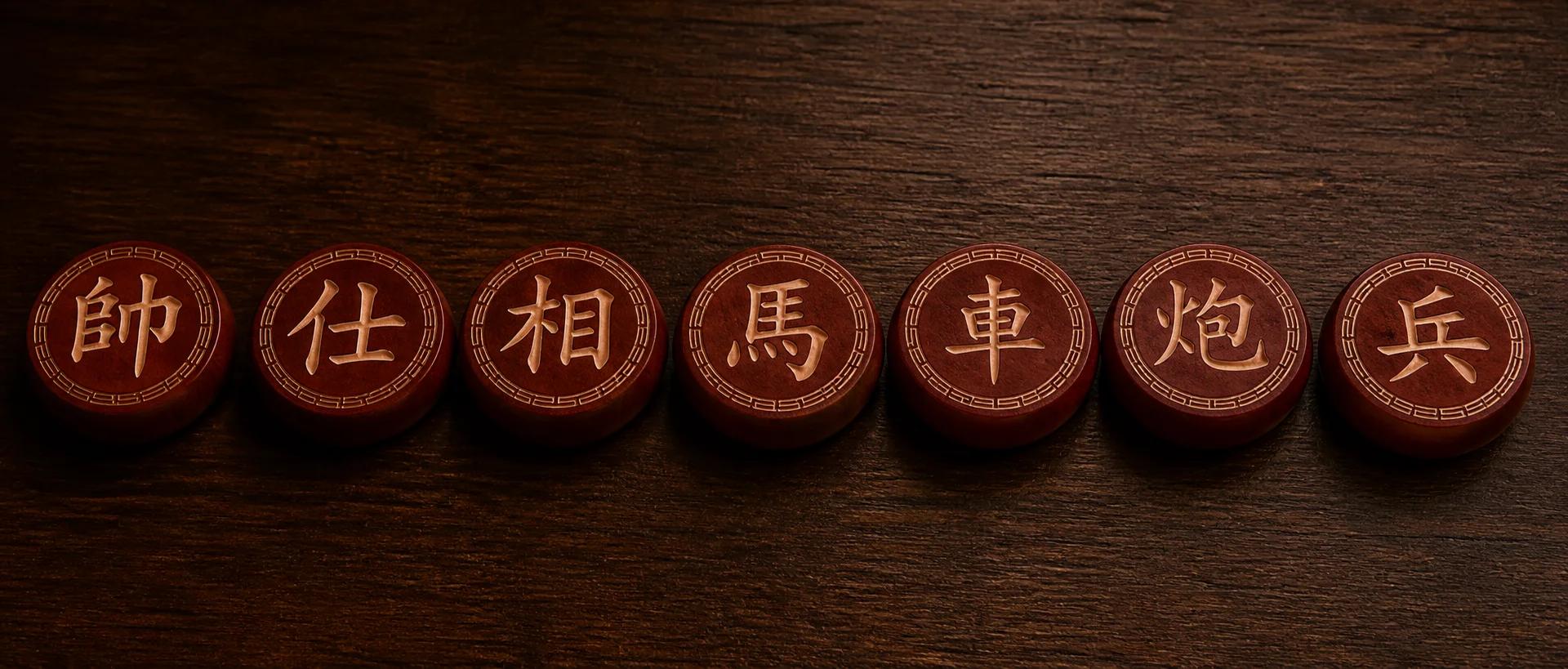
Every decision in Xiangqi involves evaluating whether a trade, sacrifice, or exchange benefits your position. Piece values provide a numerical framework for making these judgments. If you trade your Cannon (4.5 points) for an opponent's Advisor (2 points), you are losing material unless you gain a significant positional advantage. Understanding these values helps you avoid unfavorable trades, recognize when a sacrifice is justified, and calculate whether a complex sequence of captures benefits you. While piece values are guidelines rather than absolute rules, they form the foundation of sound positional play. For a complete overview of all pieces, see the pieces guide.
The Chariot: 9 Points
The Chariot (車, Ju) is the most powerful piece in Xiangqi, valued at approximately 9 points. It moves any number of intersections horizontally or vertically, making it the only piece whose power remains constant throughout the entire game. A single Chariot is worth more than a Horse and a Cannon combined. Losing a Chariot for anything less than a Chariot in return is almost always a disaster. This is why experienced players develop their Chariots as early as possible and treat their safety as a top priority. In the endgame, a Chariot alone can often force checkmate with minimal support.
Horse vs. Cannon: 4.5 Points Each
The Horse and Cannon are both valued at approximately 4.5 points, but their relative worth shifts dramatically as the game progresses. In the opening, when the board is crowded with pieces, the Cannon is often stronger because it has plenty of screens available for captures and can create long-range threats. The Horse, by contrast, can be easily blocked in a crowded position. As pieces are traded and the board opens up, the Horse becomes more powerful because it does not need screens and can reach any point on the board. Recognizing this dynamic shift is one of the most important strategic skills in Xiangqi.
Advisors and Elephants: 2 Points Each
Advisors (仕/士) and Elephants (相/象) are each valued at approximately 2 points. They are purely defensive pieces that protect the General inside the Palace. While their point value is modest, their strategic importance can be much higher than their numbers suggest. Losing both Advisors or both Elephants exposes your General to devastating attacks, especially from Cannons and Horses. In many positions, keeping a full set of defensive pieces is worth more than gaining a small material advantage. A useful rule of thumb: never trade an Advisor or Elephant unless you get clear compensation in return, whether that is material, an attack, or a significant positional improvement.
The Soldier: 1 Point Before the River, 2 Points After
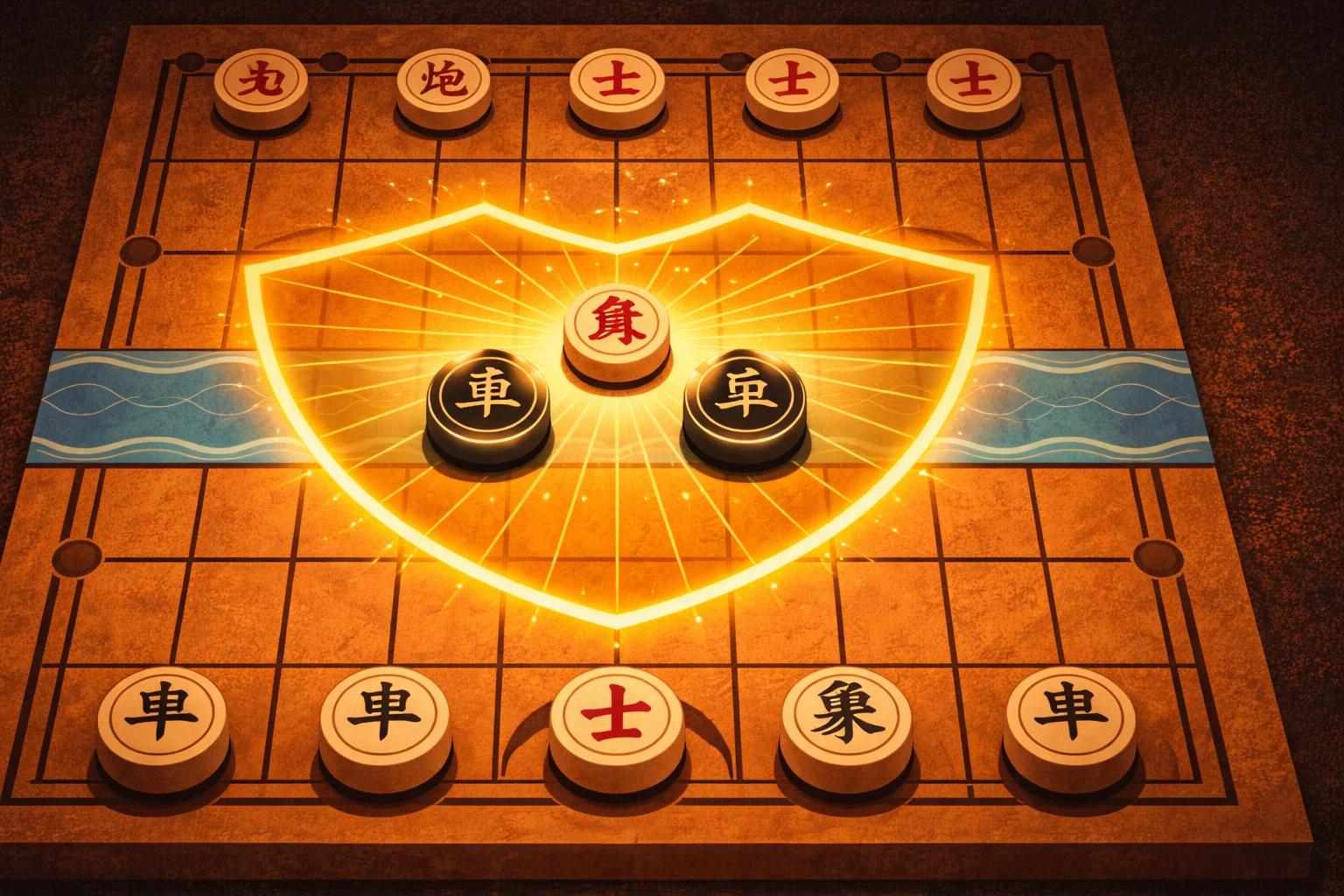
The Soldier (兵/卒) is the least valuable piece before it crosses the river, worth approximately 1 point. However, once a Soldier crosses the river and gains lateral movement, its value roughly doubles to 2 points. A crossed Soldier near the enemy Palace can be worth even more in practical terms because of its ability to restrict the enemy General and support attacking pieces. In the endgame, crossed Soldiers are often the difference between a win and a draw. This value increase means that advancing Soldiers at the right moment can be a significant strategic decision rather than a trivial move.
How Values Change During the Game
Piece values in Xiangqi are not fixed: they fluctuate based on the phase of the game and the specific position on the board. The Cannon starts strong in the opening but weakens in the endgame as screens disappear. The Horse grows stronger as the board clears and its paths become unobstructed. Chariots maintain their value throughout. Defensive pieces become more important when your opponent still has major attacking pieces. A Soldier's value increases dramatically after crossing the river. Learning to sense these shifts in real time is what separates intermediate players from advanced ones. Pay attention not just to the static point count but to the dynamic potential of each piece in the current position.
Common Material Trade Decisions
Some standard trades are easy to evaluate: trading a Chariot for a Chariot is equal, and trading a Horse for a Cannon is roughly balanced depending on the game phase. But many practical situations are more complex. Is it worth sacrificing a Cannon (4.5) to capture both an Advisor and an Elephant (4 total)? Usually not, unless it exposes the General to a decisive attack. Should you trade your Horse (4.5) for a crossed Soldier (2) and an Advisor (2)? The material is close, but you lose a major attacking piece. These judgment calls improve with experience. Play regularly on Xiangqi One to develop your intuition for material evaluation.
Practice: Sharpening Your Evaluation Skills
The best way to internalize piece values is through practice. When analyzing your games, ask yourself after every trade: did I gain or lose material? Was the positional compensation enough? Solve tactical puzzles where you must find the correct sequence of captures that wins material. Study endgames where small material differences determine the outcome. Pay special attention to positions where the dynamic value of a piece differs from its static value, such as a Cannon without screens or a blocked Horse. Over time, evaluating exchanges will become instinctive. Start with our guides on the Chariot, Horse, and Cannon to deepen your understanding of each major piece.