Your Advantage as a Chess Player
If you already play Western chess, you have an enormous advantage when learning Xiangqi. The fundamental concepts are the same: piece development, center control, king safety, piece coordination, and tactical vision. Your ability to calculate variations, evaluate positions, and think strategically transfers directly. Most chess players reach an intermediate level in Xiangqi much faster than someone starting from scratch. This guide will show you exactly what is the same, what is different, and what you need to relearn.
The Board: Similar but Different
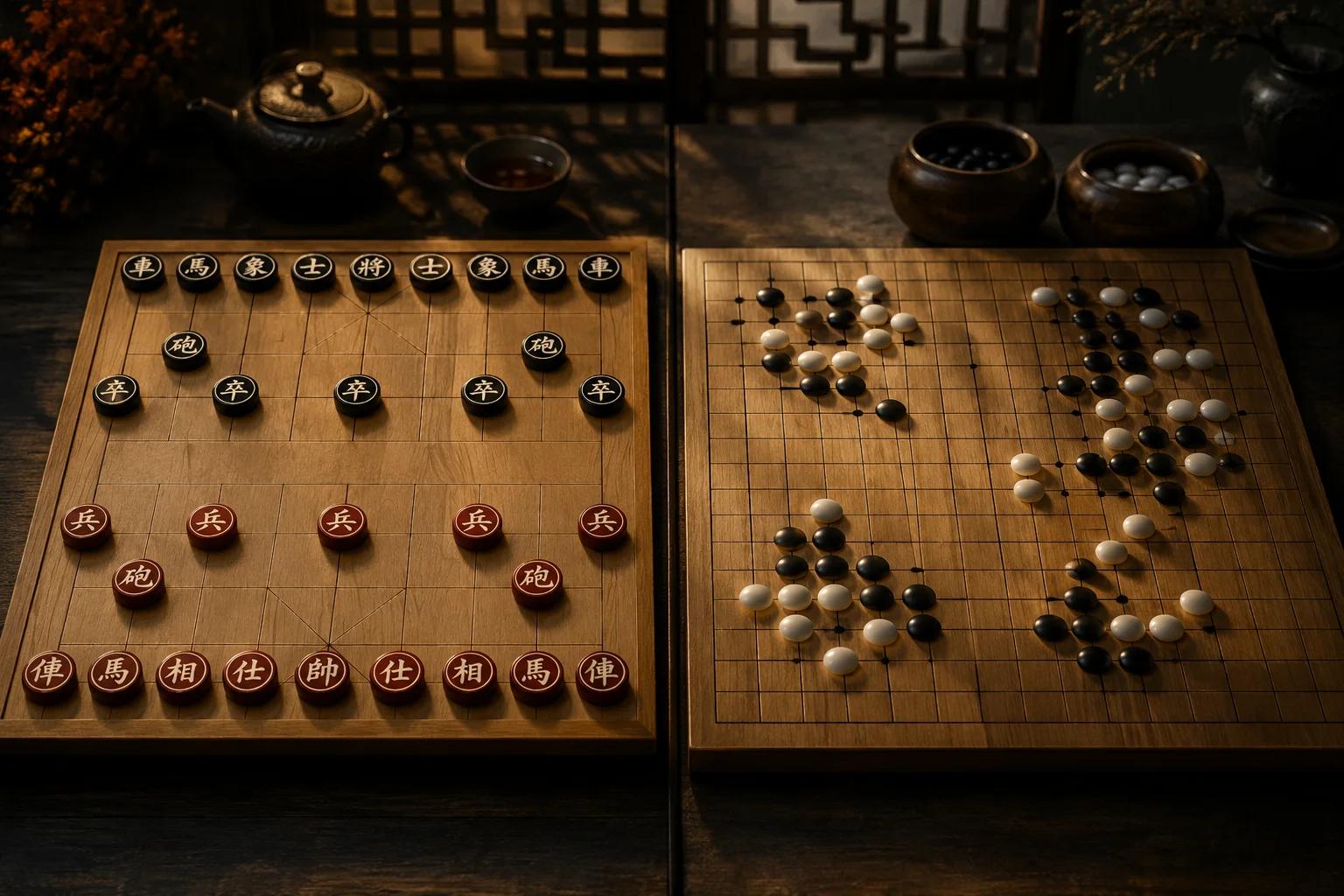
The Xiangqi board has 9 columns and 10 rows, creating a slightly larger grid than chess (8x8). The first big difference: pieces are placed on the intersections of lines, not inside squares. Two unique elements define the board: the River that divides the board in half (affects Elephant and Soldier movement) and the Palace, a 3x3 area marked with diagonals where the General and Advisors are confined. There are no white and black squares, and no concept of "same-colored squares" as in chess.
Piece Equivalents
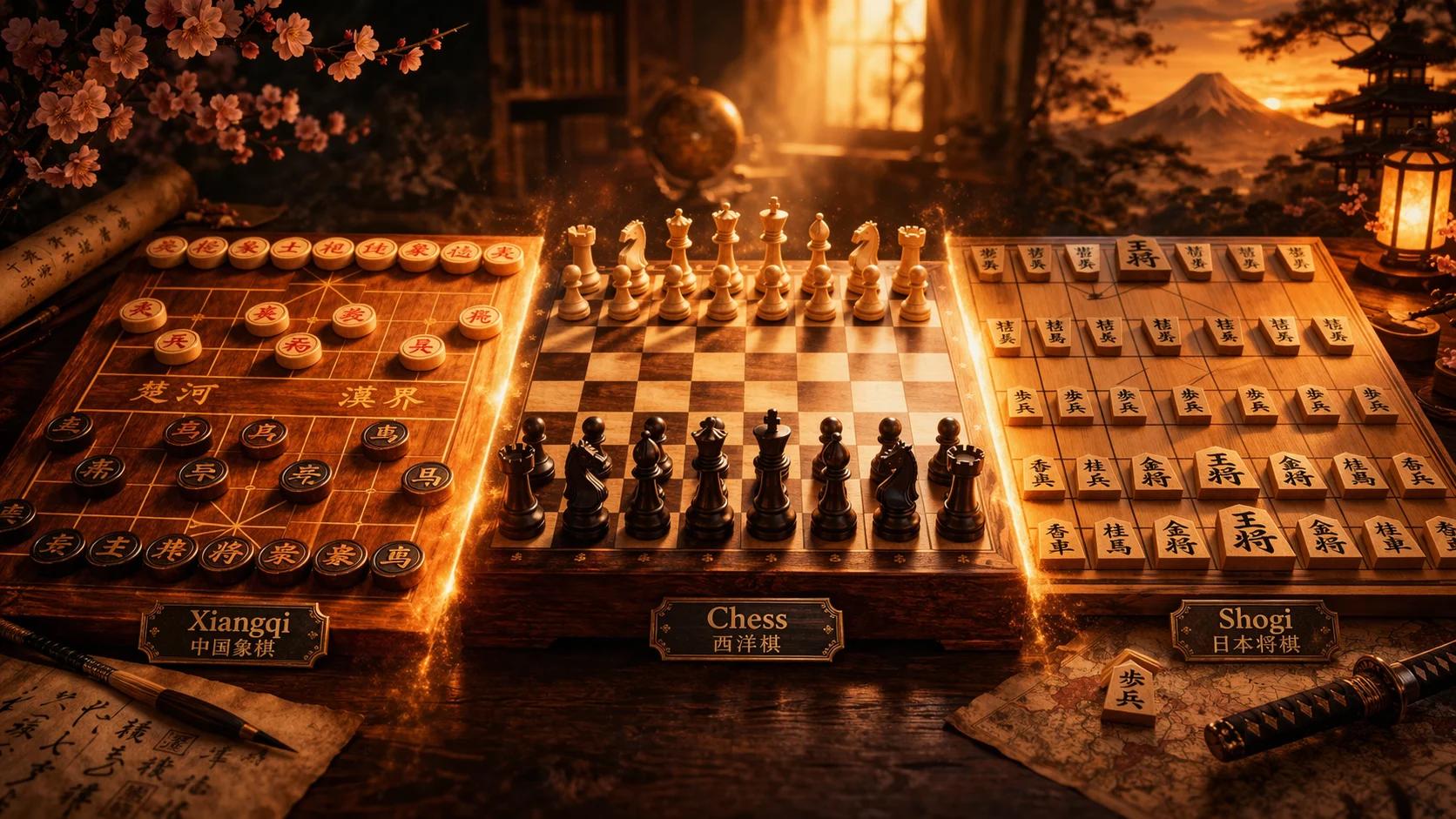
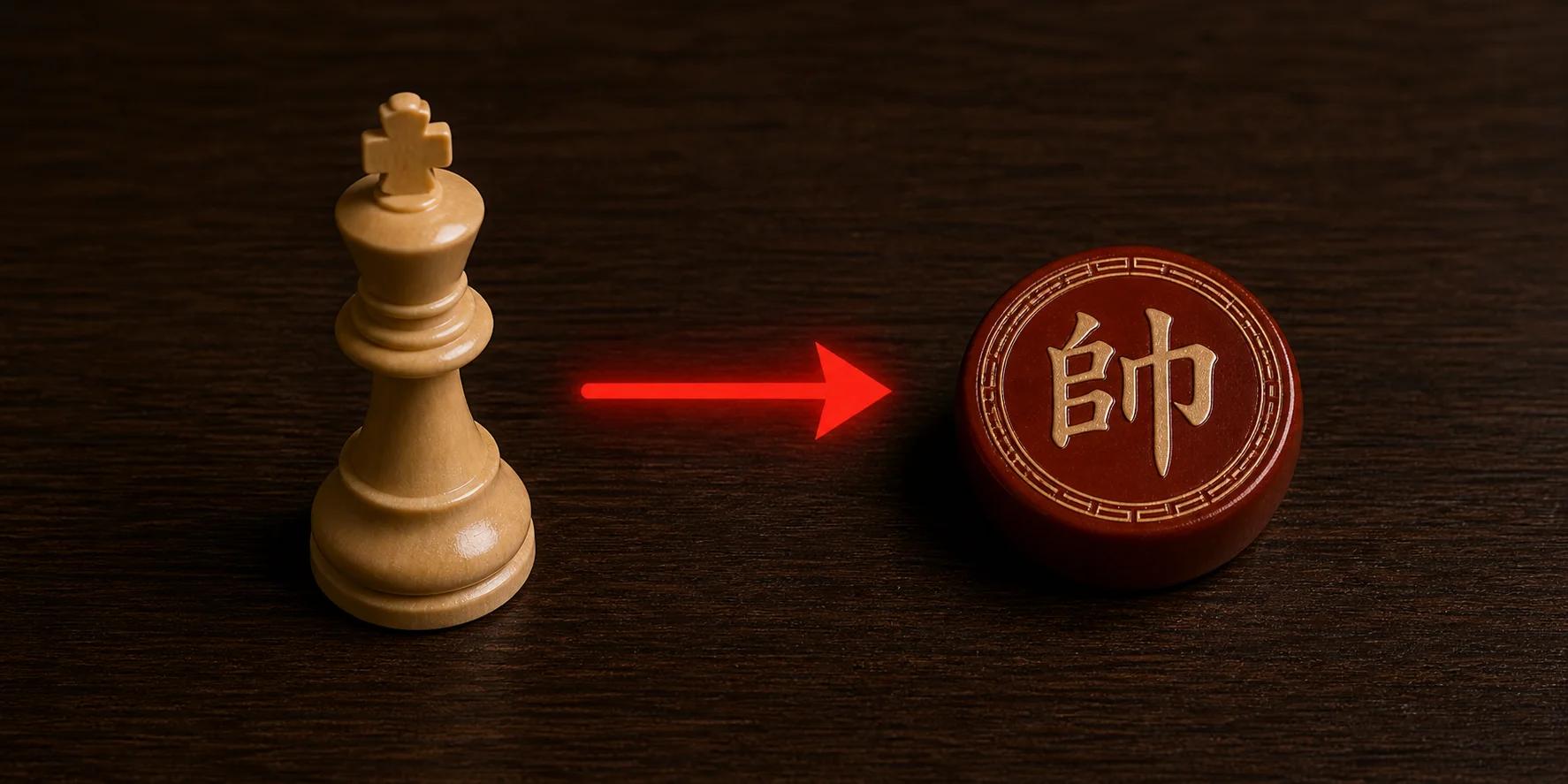
Many pieces have direct equivalents. The Chariot = Rook (identical movement, the strongest piece). The Horse = Knight (L-shaped movement, but can be blocked). The General = King (one-step movement, but confined to the Palace). Soldiers = Pawns (advance one step, but do not capture diagonally). However, there are pieces with no equivalent: the Cannon moves like a Rook but captures by jumping over an intervening piece. Advisors move diagonally within the Palace. Elephants move two steps diagonally but cannot cross the River. Read our detailed comparison between Xiangqi and Chess for more.
The Five Most Surprising Differences
First: the Horse can be blocked, which completely changes tactical calculation. Second: there is no castling; the General's safety depends on Advisors and Elephants. Third: stalemate is a loss, not a draw, which makes endgames much more aggressive. Fourth: the Cannon needs a screen to capture, a mechanic with no chess equivalent. Fifth: the Flying General rule prohibits the two Generals from facing each other on the same file without intervening pieces, creating unique endgame tactics.
Typical Mistakes Chess Players Make
The most common mistake is treating the Horse as if it could jump over pieces. In chess, the Knight jumps; in Xiangqi, it can be blocked. Another frequent error is not developing the Chariots fast enough: in chess you can afford slower development, but in Xiangqi the Chariots must be activated immediately. Also, many chess players underestimate crossed Soldiers. A Soldier that has crossed the River gains lateral mobility and can be surprisingly dangerous near the enemy Palace. Avoid these and other common beginner mistakes.
How to Adapt Your Strategic Thinking
In chess, pawns structure the position. In Xiangqi, file control and piece coordination matter more than Soldier structure. Xiangqi openings center on rapid Chariot activation and the choice between offensive formations (Central Cannon) or defensive ones (Screen Horse). The middlegame revolves around creating combined threats: a Chariot alone rarely wins; you need multiple piece coordination. Endgames are more decisive than in chess because stalemate is a loss and defensive pieces (Advisors, Elephants) have very limited mobility.
Recommended Learning Plan
Week 1: Learn the basic rules with our beginner's guide and play games against easy bots. Week 2: Study the pieces in detail, especially the Cannon and the Horse blocking rule. Week 3: Learn the basic openings, starting with the Central Cannon and the Screen Horse Defense. Week 4: Solve daily puzzles and analyze your games. Your chess level will allow you to progress rapidly once you master Xiangqi-specific mechanics. Start playing for free on Xiangqi One and put your skills to the test.