Is Chinese chess played in Indonesia?
Yes, and for far longer than most people assume. Xiangqi reached the archipelago with the Chinese communities that settled in its port cities centuries ago, and it remains most alive today in regions with deep Chinese roots — West Kalimantan, the Riau Islands, North Sumatra, Jakarta and Java. The national body, Persatuan Xiangqi Indonesia (PEXI), now has members in 16 provinces and develops national players. So when you read that Xiangqi is played by 500 million people worldwide, Indonesia is not a bystander at the edge of that figure: it has a federation, it has tournaments, and it has an organisational history going back nearly half a century.
Why was it once called 'elephant chess' in Indonesia?
The word xiang (象) means elephant in Chinese, and qi (棋) means chess — so xiangqi reads literally as "elephant chess". In Indonesia that is not a linguistic footnote: the national organisation was for years actually named Persatuan Catur Gajah Indonesia (Indonesian Elephant Chess Association, or Percagi), and in 1982 it was accepted as a unit under PERCASI, the national chess federation, under the name Percasi Unit Catur Gajah. Only in 1999 was it renamed Percasi Unit Xiangqi. So if you hear an older Indonesian player call the game catur gajah rather than catur Cina or Xiangqi, that is not a mistake — it was the official term for years.
Twenty years without Chinese characters
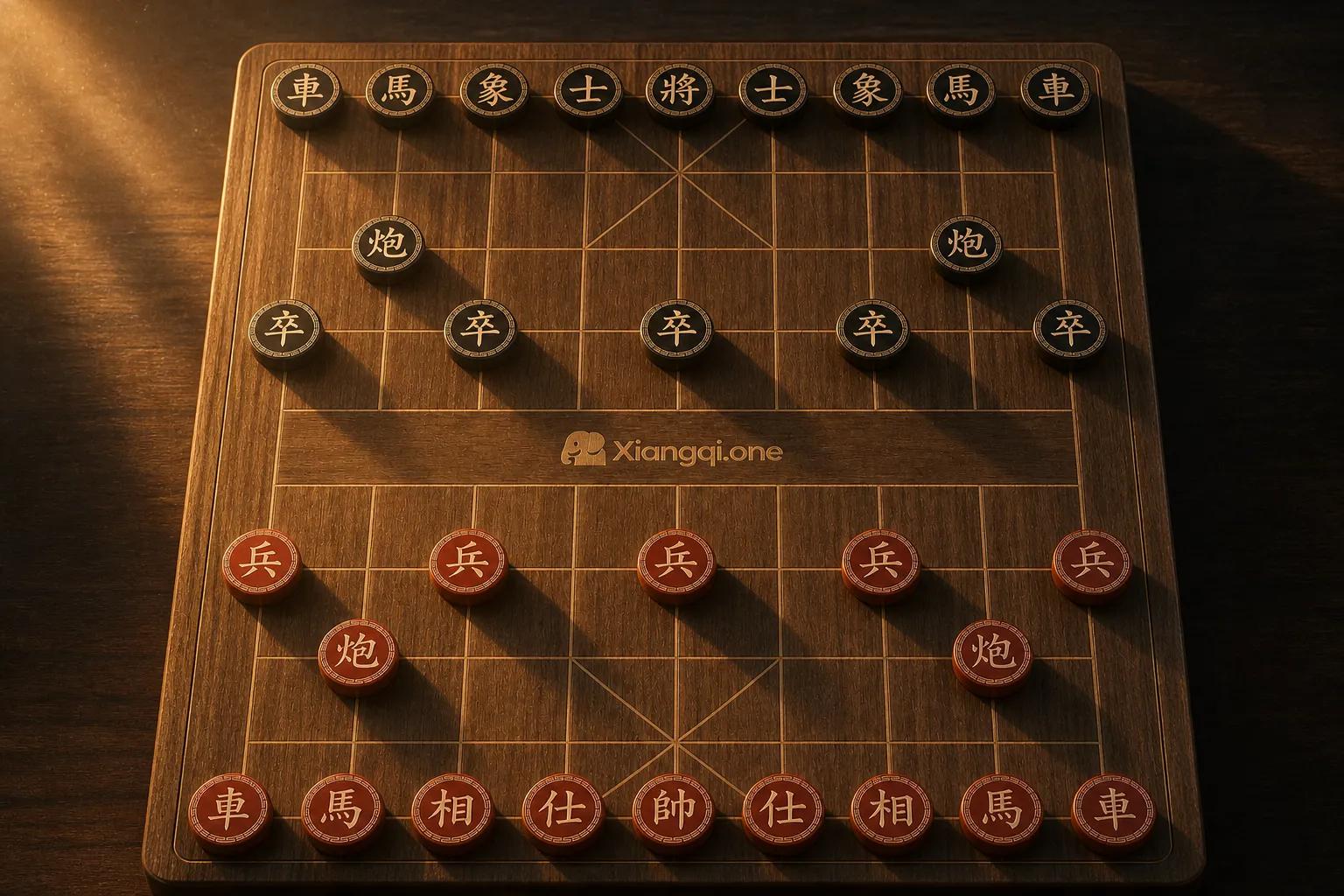
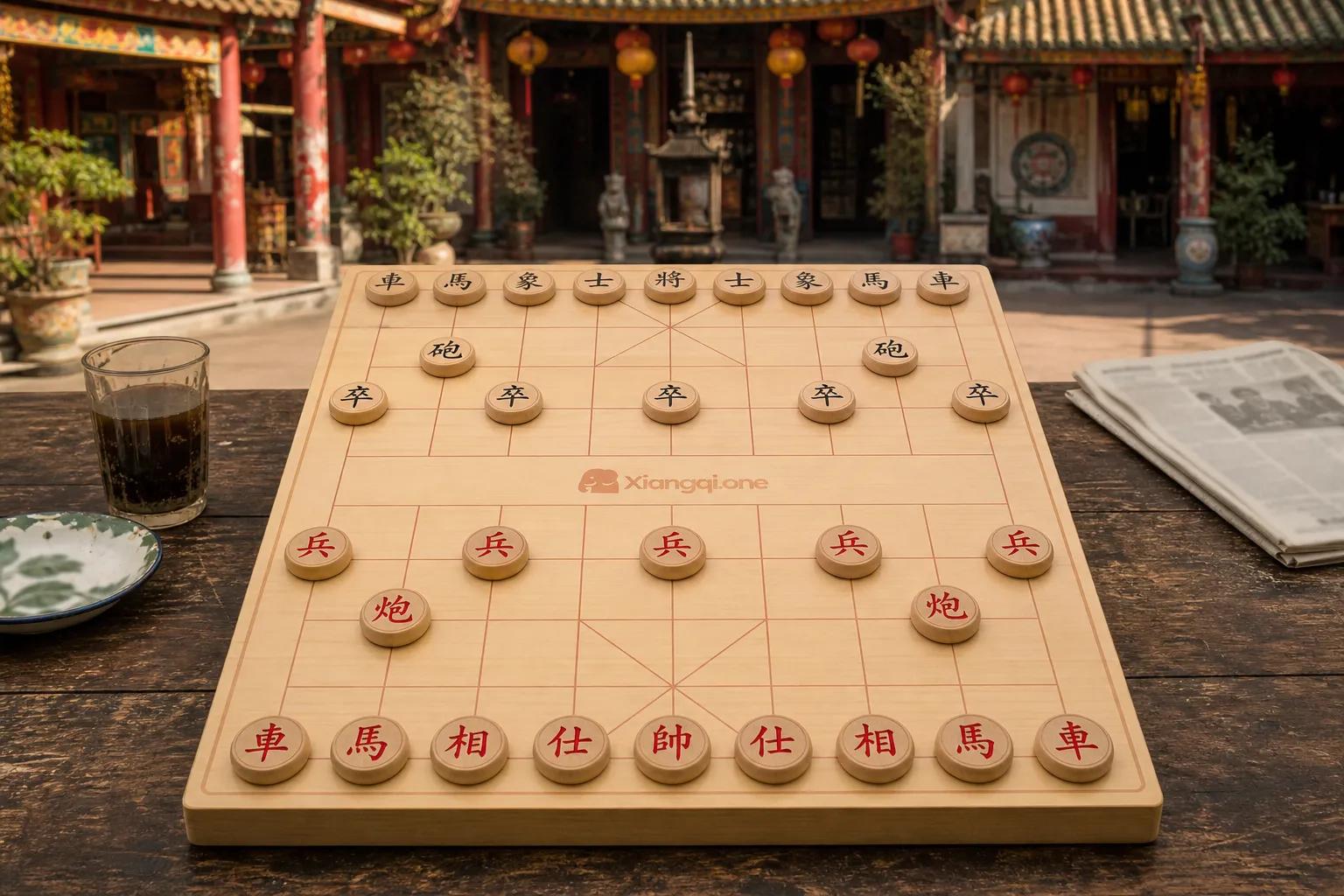
This is the part of Indonesian Xiangqi history that no other country shares. For twenty years, from 1979 to 1999, the game was played in Indonesia with pieces that carried no Chinese characters. The board and the rules were unchanged, but the writing on the pieces — 帥, 士, 相, 車, 馬, 炮, 兵 — was removed. Only in 1999 did Xiangqi in Indonesia return to the proper board and pieces. Those dates are not a coincidence: they align with the New Order period, during which the public use of Chinese script and Chinese cultural expression was restricted, restrictions that were eased only after 1998. Put differently, the Indonesian Xiangqi community kept its game alive by first giving up its writing, then taking it back as soon as conditions allowed. Very few board games anywhere have a chapter like that in their record.
From ISCI to PEXI: the organisational timeline
The national Xiangqi organisation was founded on 27 July 1979 as the Ikatan Shiang Chi Indonesia (ISCI), established by nine founders. Over time its name changed to Persatuan Catur Gajah Indonesia (Percagi). In 1982, the national body was accepted as affiliated with PERCASI as Percasi Unit Catur Gajah, and in 1999 it was renamed Percasi Unit Xiangqi, in step with the return of pieces bearing Chinese characters. The final chapter belongs to the Reformasi era: at a national congress held at the Hotel Jatra in West Jakarta on 18 August 2000, the Persatuan Xiangqi Indonesia (PEXI) was declared, with new statutes. Four names across four decades — and each change of name marked a shift in conditions off the board, not a change to the game itself.
Xiangqi in Southeast Asia and the SEA Games
Regionally, Xiangqi gained significant momentum when it made its SEA Games debut at the 2021 edition, which the pandemic pushed to May 2022 at Legacy Yên Tử in Quảng Ninh, Vietnam. Four medal events were contested: men's and women's standard individual, plus men's rapid and blitz team. Vietnam dominated with three golds, followed by Singapore with one, while Malaysia and Thailand completed the medal table. Indonesia was not among the medallists at that edition — a fact that shows precisely where the work remains. Xiangqi was contested again at the 2023 SEA Games. For Indonesia, the discipline's presence at an official regional event matters: it turns Xiangqi from a community activity into a sport with a defined development pathway. See also Xiangqi at the Asian Games for the wider context.
Where Xiangqi lives in Indonesia today
Singkawang, in West Kalimantan, is one of its most visible centres: Xiangqi tournaments there are held publicly and framed explicitly as preserving Chinese-Indonesian cultural heritage, with municipal backing. In the Riau Islands, particularly Batam, local figures have been active in introducing Xiangqi to younger people as a mind sport rather than only as a family inheritance. In the larger cities the game lives more quietly: at home, in clan associations, in coffee shops. The pattern mirrors what happens across Chinese culture more broadly — Xiangqi passes through families and neighbourhoods before it passes through clubs. What has changed in the last decade is the internet: a beginner in Surabaya can now practise against an opponent of any strength without first having to find a teacher.
How to start playing and get involved
If you want to play competitively, the formal route runs through PEXI, which can point you toward provincial branches, local clubs and national tournaments — and it is this federation that anchors the Indonesian piece terminology used throughout our Indonesian articles: Raja, Menteri, Gajah, Benteng, Kuda, Meriam, Pion. If you are starting from nothing, the two fastest returns come from learning the moves through our complete guide to playing Xiangqi and then playing immediately against an opponent at your level. If you already play Western chess — and in Indonesia that describes a great many people — our guide for chess players roughly halves the learning curve. Start right now on Xiangqi One, which is available fully in Indonesian.