Chariot vs Horse, Who Wins?
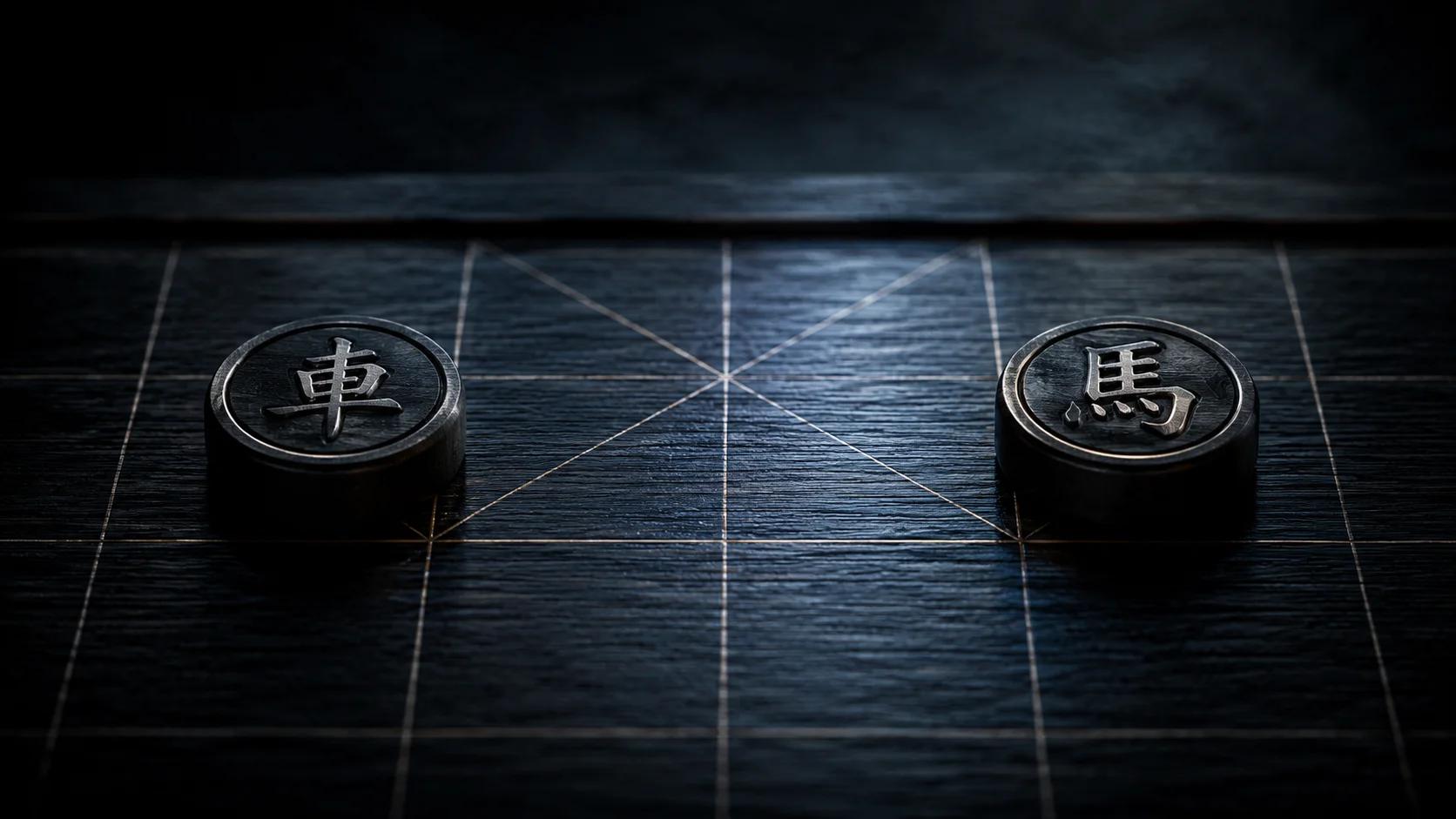
The answer depends entirely on the defenders and remaining Soldiers. In raw material, the gap is clear: according to standard piece values, the Chariot is worth about 9 points and the Horse about 4.5 points — a lead equivalent to a full Horse. Chariot versus a bare Horse, with no defenders on either side, is winning for the Chariot in nearly every position. But add two Advisors and two Elephants intact on the Horse side, and the position may very well be a draw. That is the paradox of this endgame: the theoretical advantage is massive, but converting it requires precise technique. Understanding what turns an advantage into a win — or into a frustrating draw — is one of the most useful skills to acquire, as our endgame basics guide reminds us.
Why Is the Chariot vs Horse Endgame So Common?
Middlegame exchanges often leave one side with a Chariot and the other with a Horse, because these are the two most active major pieces. The Chariot, mobile along every open line, gains tempo and captures isolated pieces. The Horse, slower but devastating at close range, often defends or harasses. A typical tactical sequence trades a Chariot for a Horse plus a Soldier or an Advisor, or vice versa, and the resulting endgame is one of the most common testing grounds in Xiangqi. Mastering it is not an expert luxury — it is everyday craft. Our improvement guide ranks these asymmetric endgames among the top study priorities once tactical fundamentals are in place.
The Classic Case: Chariot vs Horse Plus Two Advisors and Two Elephants
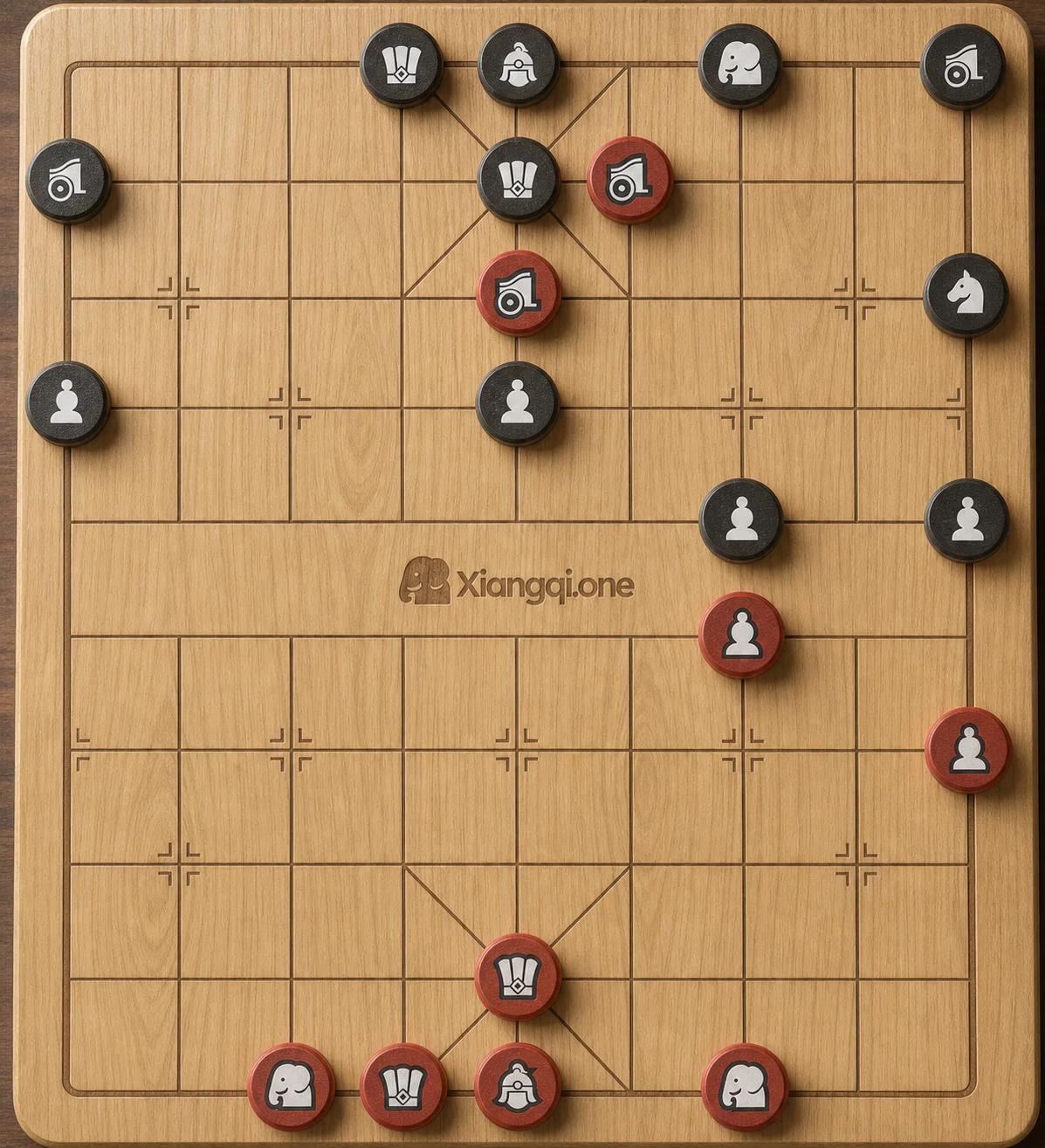
This is the reference position you must know. The side with the Chariot holds the theoretical edge, but correct defense can hold the draw. The defender keeps the Advisors and Elephants intact around the General, forming a compact wall that a lone Chariot cannot break. The Horse stays near the palace, ready to reinforce the defense or to counterattack if the opponent overextends. The attacking side must do two things: avoid trading the Chariot for the Horse (which leads to an immediate draw) and threaten the defenders one by one. If the attacker manages to remove an Elephant or an Advisor without counter-compensation, the fortress crumbles and the win becomes reachable. Without that, the position is drawn.
How to Build a Fortress with the Horse?
The classic fortress relies on the coordination of the two Advisors, the two Elephants, and the Horse. The Advisors protect the palace, the Elephants cover the attacking diagonals, and the Horse ideally sits on a central square from which it defends several vital squares at once. A successful fortress has three properties: no defender can be attacked without another defender supporting it, the Horse cannot be trapped on an edge, and the General always has at least one free square available (remember: stalemate is a loss in Xiangqi). If you are defending, keep your pieces tight and avoid unnecessary moves. A single piece pushed forward by mistake can be captured by the Chariot and bring the whole structure down.
When Should You Trade in the Endgame?
This is the single most important decision in the endgame. For the attacker with the Chariot, trading the Chariot for the Horse is almost always a mistake — except when it leads to a winning King-and-pieces vs bare King ending, which is rare with two Advisors and two Elephants still on the board. For the defender with the Horse, trading Horse for Chariot is the dream outcome: the resulting Advisors-and-Elephants vs bare King endgame is trivially drawn. The art, on the Horse side, is to offer the trade; on the Chariot side, to refuse it while staying active. See our strategy guide for beginners to understand how to weigh these material-versus-position trade-offs.
The Winning Position: Chariot Plus Advanced Soldier vs Horse Plus One Defender
Here is a case where the win is technically clear. When the attacker keeps, in addition to the Chariot, a Soldier that has already crossed the river, and the defender only has one Advisor or Elephant left, the position is winning almost without exception. The crossed Soldier, able to move sideways, becomes a second attacking piece that restricts the General. The Chariot concentrates its threats on the isolated defender. Once that defender is captured, mate follows quickly with the Chariot-and-Soldier combination. This setup is one of the concrete goals to aim at when attacking a full fortress: tear down one defender first, then push a Soldier forward. Advisor-or-Elephant sacrifices often speed up this process.
Key Techniques: Centralization, Edges, Sacrifices
Three techniques come up again and again in this endgame. Centralizing the Chariot: the Chariot must occupy the central file or a major attacking diagonal, from which it radiates across the entire board and cuts the opposing General's communications. Using the edges to trap the Horse: a Horse pushed against the edge of the board loses its retreat options; the Chariot can then gain tempo by attacking the cornered Horse. Soldier sacrifices to break the defense: a crossed Soldier can immolate itself against an Advisor or Elephant, opening a breach the Chariot exploits immediately. These three levers are the heart of the attacking play in this endgame. See also our middlegame mastery guide for preparing these endgames as early as the transition.
Classic Mistakes to Avoid
Several mistakes recur constantly, even among strong players. First mistake: letting the Horse become active by allowing it central squares. An active Horse approaches the value of a Chariot in the endgame; a Horse stuck near its palace is worth almost nothing. Second mistake: poor coordination between the Chariot and the General. The attacker who leaves the General exposed can suffer surprising Horse counterattacks, sometimes even mate. Third mistake: rushing into a Chariot-for-Horse trade to simplify — that is the royal road from a won position to a draw. Fourth mistake: ignoring the move counter in modern arbitration rules. Without objective progress (a capture or a Soldier advance), the game can be declared drawn under prolonged repetition rules.
Comparison with International Chess and Training
This endgame echoes the Rook vs Knight endgame in international chess, but with two key differences. The stalemate-as-loss rule makes the Chariot vs Horse endgame sharper: the defender cannot escape into perfect blockade. Conversely, Advisors and Elephants provide a protective shell around the palace that international chess does not have, and that is precisely what enables solid fortresses. The practical lesson is clear: study several dozen model endgames, memorize the reference positions (winning, drawn, doubtful), and train on targeted puzzles. Xiangqi One offers a dedicated endgame trainer, and our endgame category gathers every resource you need to progress methodically.